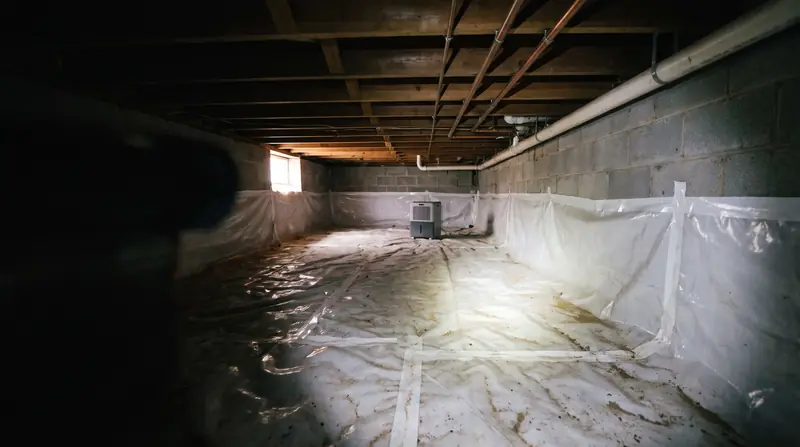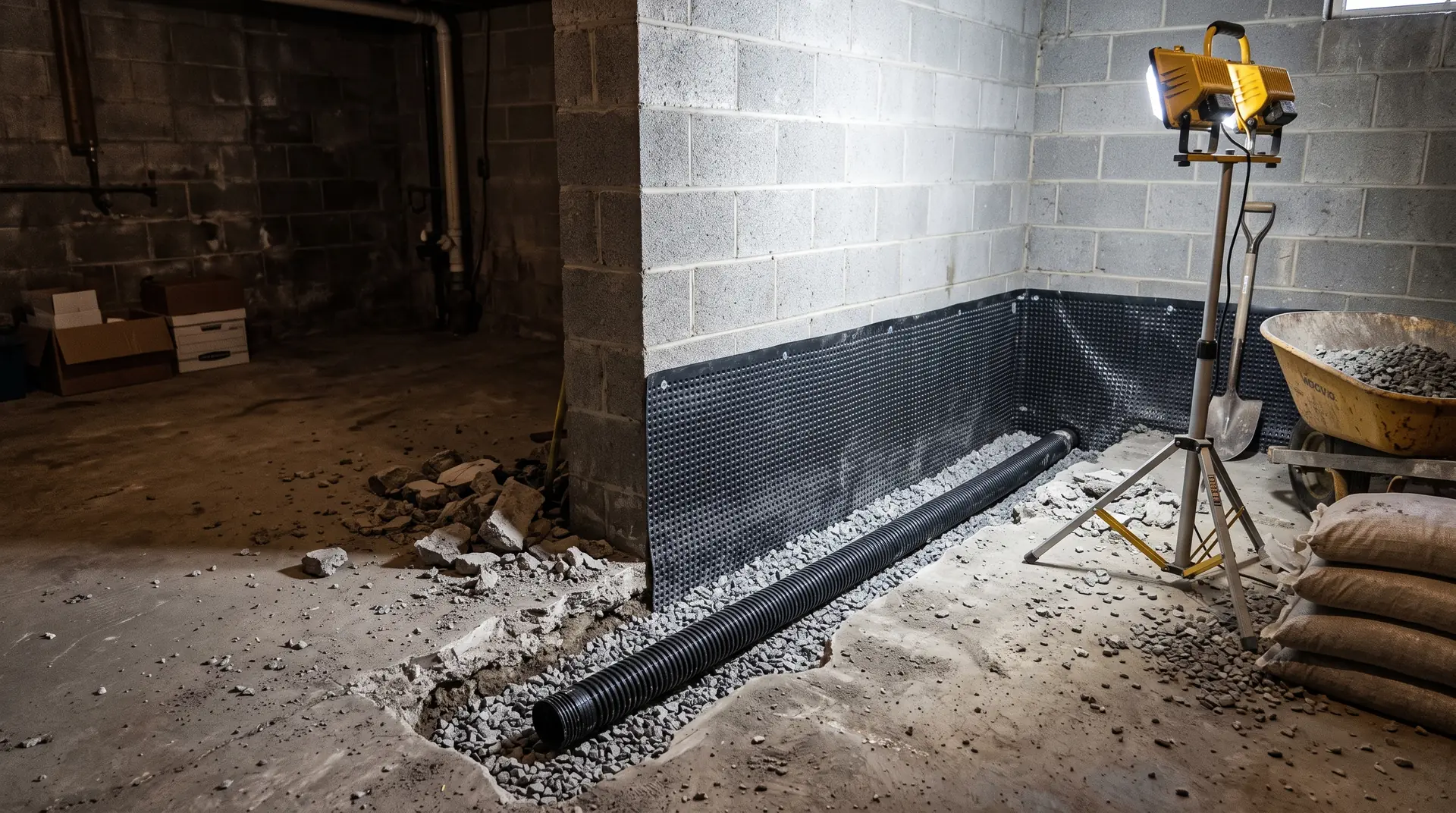
Interior drain pipe and gravel laid in a trench along a block basement wall
Calls answered 24/7

Basement Waterproofing in Hackensack NJ

Water creeping in where the floor meets the wall after every heavy rain? That's groundwater, not a pipe, and in the Hackensack valley the soil itself is part of the reason.

Number for Waterproofing & Sump Pumps

Calls answered 24/7. No obligation to book.

Undercroft Restoration is a free referral service, not a restoration company. Calls are connected to independent local service providers that serve your area, and calls may be recorded. The work is done by those providers, not by this site.

  • One Call Connects You
  • No Obligation to Hire
  • Calls Answered 24/7
  • Dry Basement for Good
~1,097Yearly clay layers in Little Ferry lake clay
36.2%Hackensack homes built 1940 to 1969
~47 in.Rain a year in Hackensack
Ida 2021Water up through Saddle Brook floors
01

Why Hackensack Valley Basements Leak: Glacial Lake Clay, Hydrostatic Pressure and Block Walls

At the end of the last ice age, the valley that Hackensack sits in was the bottom of a glacial lake, now called Glacial Lake Hackensack. For centuries, fine clay and silt settled out of that lake water, one thin layer a year. Geologists counted about 1,097 of those yearly layers in the old clay pits at Little Ferry, according to a 2010 New York State Geological Association field guide to the valley's glacial geology. That lake-bottom clay and silt still sits over the red shale and sandstone underneath much of the valley.

Why does that matter for your basement? Soil conditions vary lot by lot, but in general, clay drains slowly and holds water. After a long rain, the ground around a foundation can stay soaked for days, and that water has nowhere to go but against your walls and under your floor.

01

Clay That Holds Water Against the Foundation

Sandy soil lets rain soak down and away. Clay holds it near the surface and against the foundation like a wet blanket. The builder's backfill around the house is usually looser than the soil beyond it, so water collects in that ring of loose fill and sits there.
02

Hydrostatic Pressure Pushing Water Through the Floor Joint

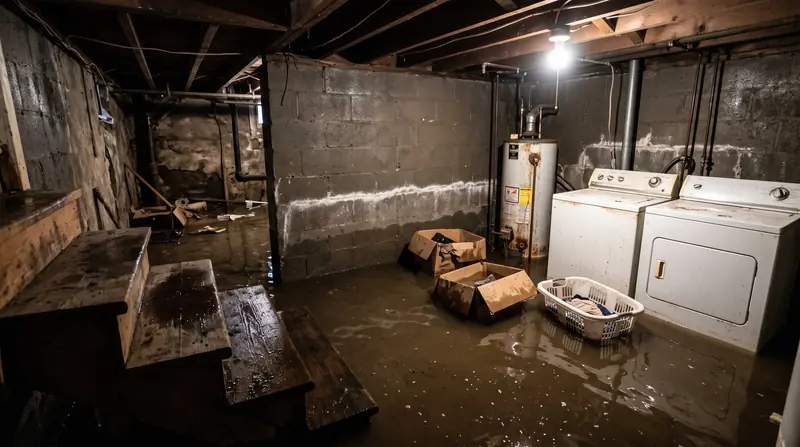
Water in saturated soil pushes on whatever holds it back. That push is hydrostatic pressure, and it finds the weakest spot: the joint where the basement floor slab meets the wall. During Ida in 2021, CBS New York reported water that "bubbled up from floors and walls" in Saddle Brook homes. The everyday version is quieter: water along the base of the walls after rain, with no broken pipe anywhere.

03

Hollow Block Walls From the 1940s to 1960s

About 36 percent of Hackensack homes were built between 1940 and 1969, and many sit on concrete block. Block walls are hollow. Water gets into the cores, fills them, and seeps out low on the inside face or at the floor joint. White, chalky deposits on the wall, called efflorescence, are minerals left behind by water passing through.

02

Basement Waterproofing Contractor or DIY Sealer? What Paint-On Products Can and Can't Do

Masonry sealers and waterproof paints are the first thing most people try, and they aren't useless. Basement sealing with a good product can cut down dampness that wicks through a wall, reduce musty smells, and help with condensation in a humid summer.

What they can't do is hold back water under pressure. A water seal for basement walls sits on the inside surface. When the ground outside is saturated and pushing water through the block, it pushes the coating off from behind, or the water simply goes around it at the floor joint. If water actually runs or puddles, rather than the wall just feeling damp, paint won't fix it.

That's the dividing line: damp walls and condensation, try a sealer and a dehumidifier. Water coming in during storms, you need a drainage system, and that's contractor work.

03

Interior vs Exterior: Choosing Between a Drain System Inside and Digging Outside

There are two main ways to keep groundwater out. Most Bergen County basements end up with the first.

01

Interior Drain Tile and a Sump: The Usual Fix for Bergen Block Basements

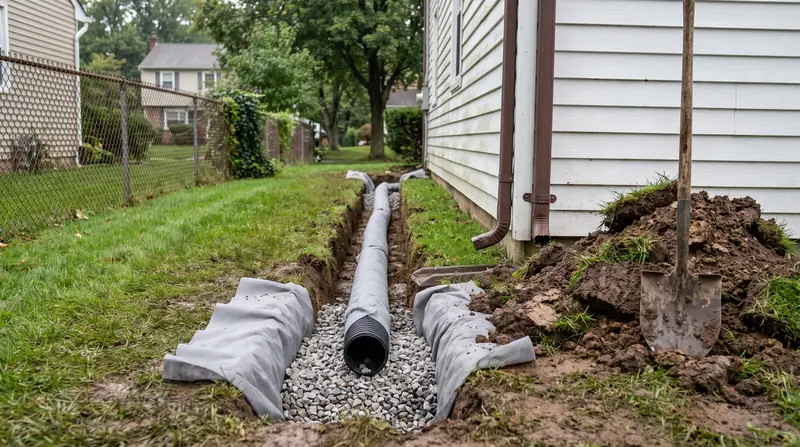
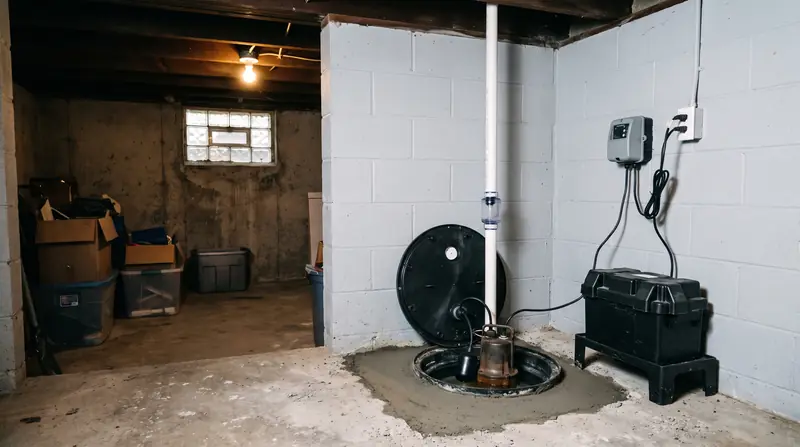
A contractor cuts a trench in the basement floor along the walls, lays perforated drain pipe in gravel, and runs it to a sump pit. Water that comes through the wall or up at the joint drops into the drain and gets pumped out. Weep holes are often drilled into the bottom row of block to drain the cores. It doesn't stop water reaching the wall; it controls it once it does. Details on the drain itself are on the french drains page, and on pumps on the sump pump page.

02

Exterior Basement Waterproofing: Excavation, Membrane and Footing Drains

The other approach digs down to the footing outside, cleans the wall, applies a waterproof membrane, and installs a new drain at the footing. It stops water at the outside face, which is the better fix in principle. It's also far more disruptive: decks, walkways, driveways and landscaping have to come up. On tight Hackensack lots and shared driveways, there often isn't room to dig. It makes the most sense on new construction, or where one wall is the problem and has open access.

03

Vapor Barriers and Moisture Barriers on Basement Walls

With an interior drain, many contractors add a plastic wall membrane that runs from the top of the foundation down into the drain. Basement vapor barriers like this catch water seeping through the wall and send it into the drain, and keep damp block from making the room humid. A basement moisture barrier also protects drywall if you finish the space later.

04

Basement Sealing and Waterproofing for Floor Cracks and Pipe Penetrations

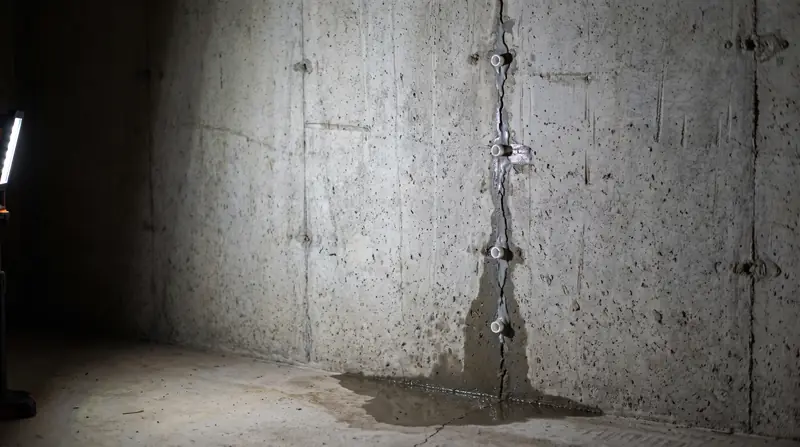
Some leaks are specific: a crack in the wall or floor, or the gap around the pipe where the water or sewer line comes through. Those can be sealed directly, often with polyurethane or epoxy injection. See foundation crack repair.

04

Signs Your Hackensack Basement Needs Waterproofing Before Finishing It

Before you put down carpet and hang drywall, look for these:

  • White, chalky efflorescence on block or concrete walls.
  • A musty smell that doesn't go away.
  • Water stains or tide lines low on the walls.
  • Rust on the feet of the water heater, furnace or washer.
  • Peeling or bubbling paint on the foundation walls.
  • Damp spots at the floor-wall joint after rain.
  • Mold on stored items or wood. See basement mold.

Water Proofing for Basement Rooms You Plan to Finish

Finished basements are where water hurts most: family rooms, home offices, bedrooms. Finishing over a wall that takes water turns every storm into a tear-out. If you see any of the signs above, solve the water first, then finish, and use materials that tolerate moisture.

05

Where Your Sump Water Can Go: Bergen Towns Ban Hookups to the Sanitary Sewer

A waterproofing system collects water. Where it goes next matters, and it's regulated.

  • Never into the sanitary sewer. Clean groundwater in a sewage pipe overloads treatment plants and can back up sewage into homes. Many New Jersey towns ban it outright. River Edge's Ordinance #1080, for example, prohibits hooking sump pumps, downspouts or foundation drains to the sanitary sewer, and proper sump discharge is required for a Certificate of Occupancy.
  • Why towns do this: under N.J.A.C. 7:14A-22.16, sewer operators near capacity or tied to combined sewers must plan to cut the clean water flowing in, including by disconnecting sump pumps and roof leaders.
  • In Hackensack, the city code (§141-23) allows only stormwater into the city's storm sewer, and §141-12 requires a city permit for private sewer work in a street. Any tie-in to city drainage needs the city's approval.
  • The usual answer: discharge onto your own lawn, a garden bed or a drywell, well away from the foundation, and away from neighbors' property and sidewalks, where it can freeze into ice in winter.
06

Basement Waterproofing NJ Rules: HIC Registration, Written Contracts and Your 3-Day Right to Cancel

Waterproofing is home improvement work under New Jersey law. The Division of Consumer Affairs checklist sets out what contractors must do:

  • Register every year with the Division of Consumer Affairs, and show the registration number on ads, contracts, correspondence and commercial vehicles.
  • Put the contract in writing for all but very small jobs, with the contractor's legal name and registration number, insurance details, a description of the work and materials, any warranty, the total price, and start and completion dates.
  • Your right to cancel: you can cancel at any time before midnight of the third business day after you receive a copy of the contract, in writing, by certified mail or in person.

Look up any contractor's registration before you sign.

Transferable Warranties: What They Cover and What Voids Them

Many waterproofing companies advertise lifetime or 25-year transferable warranties. Read what's actually covered. Most cover water coming through the areas where the system was installed, not the whole basement. Many exclude sump pump failure, power outages, surface water from gutters or grading, and damage to finished walls and floors. Some require annual service or registration within a set time after you buy the house. Get the warranty document before you sign the contract.

07

Reading a Waterproofing Company's Website: Red Flags Worth a Question

A website tells you little about the crew that will dig in your basement. Headings packed with "affordable" and "low cost," two different phone numbers on one page, or decades in business claimed on a brand-new site are all reasons to ask more questions. Some companies are also large multi-state operators based far from Bergen County. None of that proves bad work. Check the company itself: its NJ home improvement registration, where it's based, and who will actually be on site.

01

Questions to Ask a Basement Waterproofing Company Before You Sign

  • Where exactly is the water getting in, and how do you know?
  • Interior or exterior, and why that one for my house?
  • Where will the sump discharge, and does that meet town rules?
  • What's your NJ home improvement registration number?
  • What does the warranty cover and exclude, in writing?
  • Which parts need permits, and who pulls them?
02

How Undercroft Restoration Calls Work: You're Connected With a Local Waterproofing Contractor

Undercroft Restoration is a referral service. When you call (201) 377-3819, you're connected with an independent, third-party contractor that serves your area. That company inspects, quotes and does the work. Undercroft Restoration doesn't do the work, set prices, hold contractor registrations or offer warranties. For how the line works across every service, see the home page.

08

Basement Waterproofing North Jersey Homes Need After Storms Like Ida and July 2026

Big storms are when waterproofing problems show themselves. During Ida in September 2021, homeowners across Bergen County found water coming up through floors that had never leaked. On July 27 and 28, 2026, the NJ Weather Network recorded more than four inches of rain across eastern Bergen County and reported "several feet of water in some basements in Bergenfield."

Local search data shows waterproofing questions spike in March, May, August and December: after spring rains and snowmelt, summer storms, and the first hard freezes. The best time to fix a leaking basement is in the dry weeks before those, not the morning after.

09

Water Proofing in Basement Walls of a 1950s Block Home: One Bergen County Job

About this example. Undercroft Restoration connects callers with independent companies and doesn't publish their customers' jobs. This is an illustrative example, not a record of a real job. It's built from Hackensack housing data (about 36 percent of homes built between 1940 and 1969, many on hollow block foundations) and the way groundwater enters at the floor joint after heavy rain.

A 1950s ranch in Bergen County on a concrete block foundation. The owners want to finish the basement for their kids. Every heavy rain, a dark line of water appears along two walls where the floor meets the block, and there's white crust on the lower rows of block.

They tried a waterproof paint two years ago. It's peeling at the bottom.

A contractor finds no cracks and no plumbing leak. The water is groundwater coming through the block cores and up at the joint. The recommendation: interior drain tile along the two wet walls, weep holes in the bottom course of block, a wall membrane, and a sump pump with a battery backup. The discharge line runs out to a drywell in the back yard, away from the neighbor's side.

The work takes a few days. The next big storm, the drain carries water to the pit and the floor stays dry. The finish work goes ahead the following spring.

The lesson: paint couldn't beat the pressure; a drain gave the water somewhere to go.

10

Waterproofing Pieces in Detail: French Drains, Sump Pumps, Crawl Spaces and Cracks

11

Waterproofing Calls From Hackensack 07601 and Across Bergen County

Calls come from Hackensack's single-family streets in the Fairmount section and the Johnson Avenue area, and from the block-basement suburbs across the county. Calls from Teaneck, Paramus and Fort Lee are connected the same way. More on water damage in Hackensack and the full Bergen County service area.

Call any time

Tired of Wet Floors After Every Storm? Call and Get Connected With a Bergen County Waterproofing Contractor

Calls answered 24/7. For waterproofing in Bergen County homes: have your town and where the water comes in ready when you call.

Undercroft Restoration is a free referral service, not a restoration company. Calls are connected to independent local service providers that serve your area, and calls may be recorded. The work is done by those providers, not by this site.

Questions

What Bergen County Homeowners Ask About Waterproofing a Basement

Still have a question?

Calls answered 24/7. Pick the number for your problem, then say your town and what happened.

Why does my basement flood when it rains?

Usually because the soil around the house is saturated and water is pushing through the walls or up at the floor joint. Clay soil, block walls, clogged gutters and poor grading all make it worse.

Is interior or exterior waterproofing better?

Exterior stops water at the outside face, but it means digging up everything around the house. Interior drain systems control water after it reaches the wall and are the usual choice for existing Bergen County basements. The right answer depends on your house and lot.

Does water proofing of basement floors stop water coming up through cracks?

A floor coating alone usually doesn't hold back water under pressure. An interior drain relieves the pressure, and specific cracks can be injected. A contractor should find where the water enters first.

What affects basement waterproofing cost?

How many linear feet of wall need drainage, interior or exterior work, whether a sump pump and backup are needed, the wall type, access, and whether finished walls and floors have to come out. Call (201) 377-3819 and ask for a written scope before any work starts.

How long does interior waterproofing take?

Most interior drain systems take a few days, depending on how many walls, how the floor breaks up, and whether a sump pit has to be dug. Finished basements take longer because walls have to come out first.

Do I need a permit in Hackensack?

Ask the contractor. The drain work itself may not need one, but electrical work for a new sump circuit or plumbing and any tie-in to city drainage can. Hackensack requires a city permit for private sewer work in a street.

Will waterproofing stop basement mold?

It removes the water that feeds basement mold. Mold that's already growing still needs to be removed, and humidity still needs to stay between 30 and 50 percent.

Can I finish my basement after waterproofing?

Yes, once the system has been through a few heavy rains without leaking. Use moisture-tolerant materials, keep the membrane and drain accessible, and run a dehumidifier.

What does a transferable warranty mean when I sell?

It can pass to the buyer, which helps when a disclosure form asks about past water problems. Check whether the transfer needs paperwork or a fee within a set time, and what the warranty actually covers.

Does homeowners insurance pay for waterproofing?

Usually not. Insurers treat waterproofing as maintenance and prevention. Some policies cover sudden damage from water that got in, but not the system to stop it.

Call (201) 377-3819Waterproofing