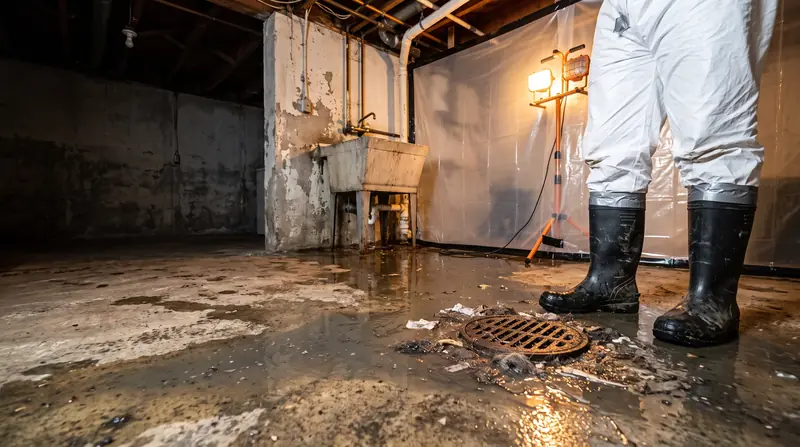
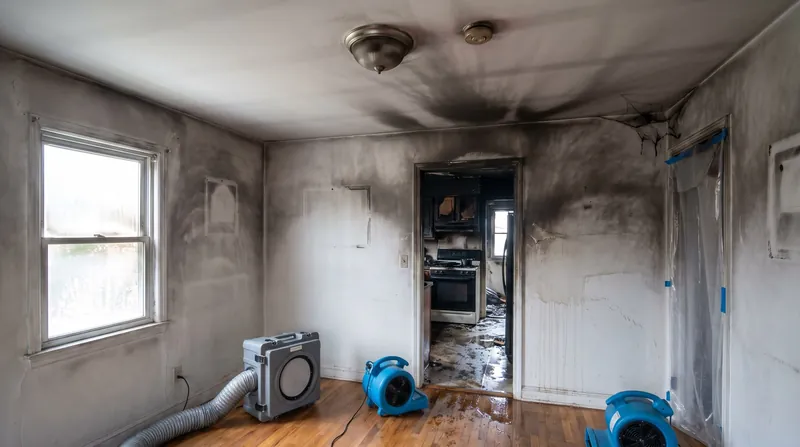
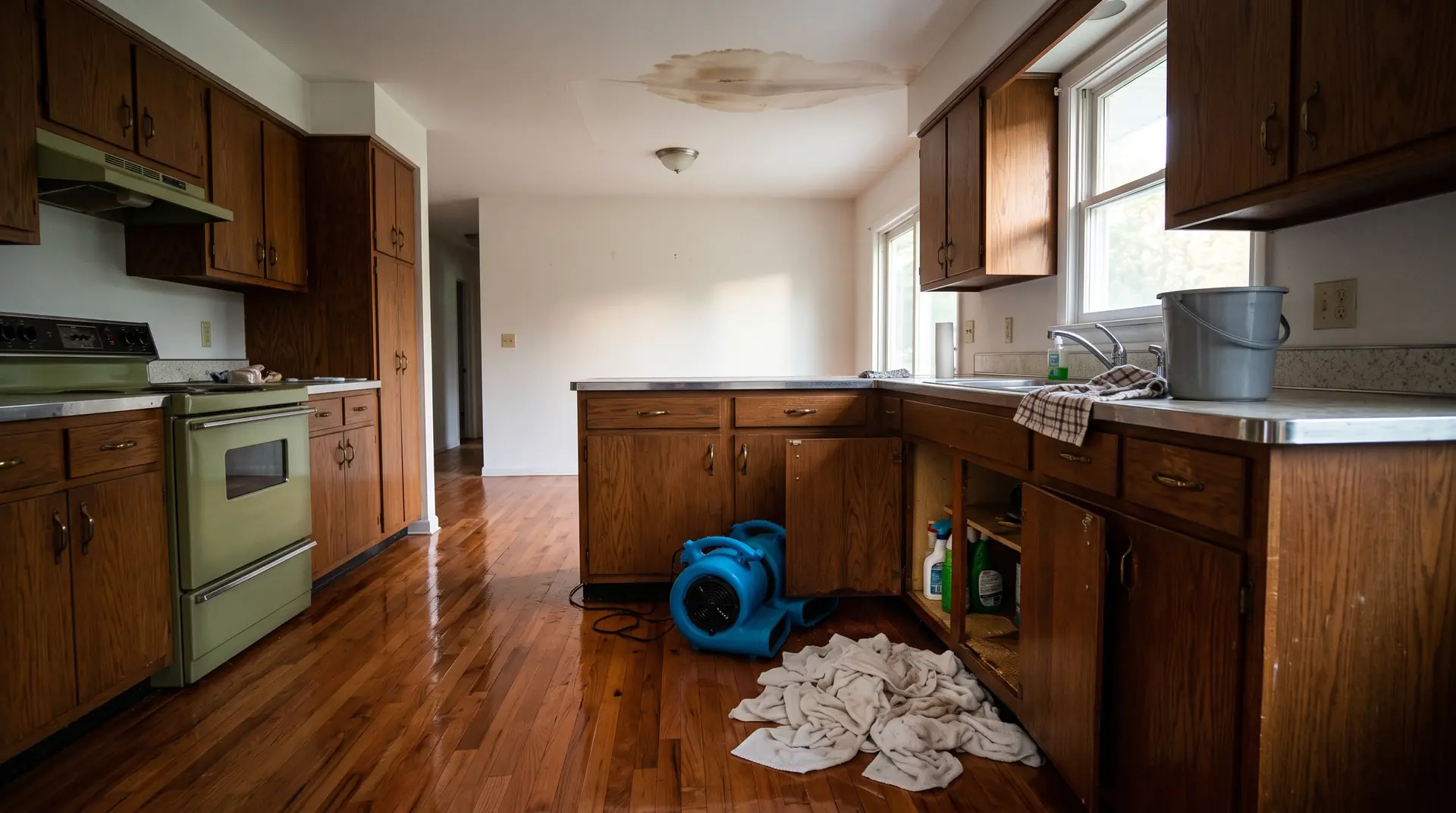
Kitchen after a burst supply line, with water on the hardwood and a sagging stained ceiling
Calls answered 24/7

Water Damage Restoration in Hackensack NJ

Pipe burst, water heater dead, or the ceiling dripping from upstairs? One call to Undercroft Restoration gets you a local company for water damage and restoration, extraction to rebuilt walls.

Number for Water Damage, Fire, Mold & Sewage

Calls answered 24/7. No obligation to book.

Undercroft Restoration is a free referral service, not a restoration company. Calls are connected to independent local service providers that serve your area, and calls may be recorded. The work is done by those providers, not by this site.

  • One Call Connects You
  • No Obligation to Hire
  • Calls Answered 24/7
  • Leak to Rebuild
~52%Hackensack homes built before 1970
64%Hackensack households that rent
24 to 48 hrsEPA window to dry wet materials
Jan 2026Deep freeze broke North Jersey mains
01

Water Restoration Services Built for Hackensack's Pre-1970 Pipes and Stacked Apartments

About half of Hackensack's homes went up before 1970. Houses that age often still have galvanized or early copper supply lines, cast iron radiators, and a water heater in a basement that got finished around it years later. Meanwhile most housing in the city sits in large apartment buildings, and about 64 percent of households rent. When a pipe lets go in a building like that, the water rarely stays in one unit.

This page covers water that starts inside the building, and the whole job that follows. One call gets you a company that handles:

  • Getting standing water out (emergency water removal)
  • Drying walls, subfloor and framing, with readings to prove it (water mitigation)
  • Cleaning and antimicrobial treatment
  • Putting drywall, floors and trim back (water damage repair)
  • Photos, moisture logs and a written scope for your insurance carrier

One honest note: Undercroft doesn't do the work. Your call goes to an independent restoration company serving your part of Bergen County, and that company runs the job.

02

Emergency Water Restoration in Hackensack Starts in Your First 10 Minutes

What to do when a pipe bursts: Shut off the main water valve. Cut power to wet rooms at the breaker panel if you can reach it without standing in water. Photograph every wet room before you move or throw anything out. Then call a restoration company to extract the water and start drying, because water keeps spreading into drywall and subfloor while you wait.

After this past winter's thaw, a plumber interviewed by News 12 New Jersey said those ten minutes to find and close the shutoff can separate a small repair from a very large one.

Shut the Main Valve, Usually Next to the Veolia Meter in the Basement or Utility Closet

In most Hackensack houses the main shutoff sits right beside the water meter, where the Veolia line comes through the foundation wall. A round handle turns clockwise until it stops; a lever turns across the pipe. Find yours on a dry day and hang a tag on it. In an apartment, the super controls the riser valves, so the super is your first call.

Kill Power to Wet Rooms at the Breaker Panel Before You Step In

Water and a live outlet in the same room can actually hurt you. If the panel sits somewhere dry, switch off the circuits for the wet rooms. If it's in the flooded basement, stay out and say so when you call. Keep clear of any sagging ceiling, too. Wet drywall is heavy and drops without warning.

Photograph Every Wet Room Before Anything Goes to the Curb

Wide shots, then close-ups: the waterline on the walls, the ceiling stain, the failed part, the model number on the heater or dishwasher. New Jersey's Department of Banking and Insurance tells policyholders to document damage before disposing of anything. The insurance claims help page lists what else to keep.

Renting on Prospect Avenue or Main Street? Call the Super, Then Call This Line

Maybe you work nights at Hackensack University Medical Center and come home to water across the kitchen floor off Prospect Avenue. Or you walk from the Anderson Street station to your building downtown and hear dripping behind the bathroom wall. A burst pipe emergency in a rental runs on two tracks: the super handles the building, and your belongings are usually your renters policy's job. Call the super, then call (201) 409-9820 and ask for your unit to be documented on its own.
Water coming in right now? Call (201) 409-9820. Calls answered 24/7. You're under no obligation to book.

Call (201) 409-9820
03

Where Hackensack Water Damage Starts: Radiators, Water Heaters and the Unit Upstairs

Inside the house, three causes do most of the damage in a city like this: burst pipes, failed appliances and water coming through the ceiling from above.

Water from outside is a different job. Came up through the basement floor after rain? See flooded basement cleanup. Came in with a storm or off the river? See storm and flood damage. Sewer water up a floor drain is sewage cleanup.

01

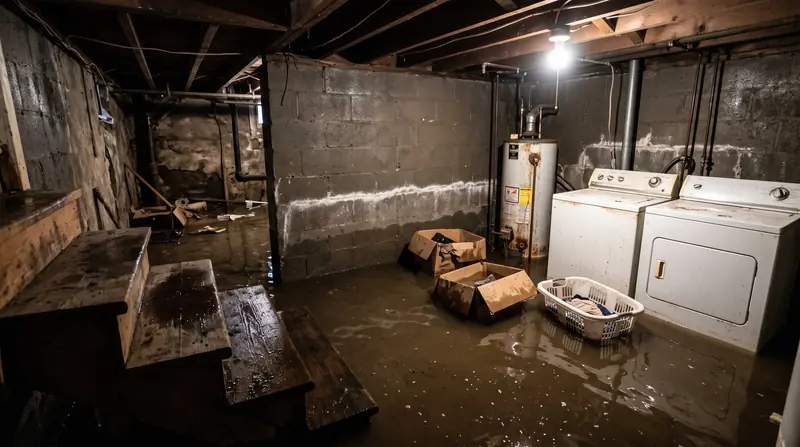
Water Heater Leak Cleanup When a Bergen Basement Tank Lets Go Overnight

The bottom rusts through or a fitting breaks, and the cold supply keeps feeding the tank until someone closes the valve on top. It often happens overnight, and the water keeps running until morning. In a finished basement that means carpet pad, the bottom of the drywall, and every cardboard box. If your heater sits in a drywalled closet with no floor drain, a slow leak can hide until the carpet squishes. Open that closet door once a month.

02

Dishwashers and Washing Machines Soaking Hardwood Kitchen Floors

A dishwasher leak water damage call usually starts quietly: a supply line or door seal dripping under the cabinet for days. By the time anyone notices, the hardwood in front of it is soaked. Wet hardwood cups, with each board's edges rising above the middle. Dried fast, with the subfloor checked, boards often settle back. Left alone, they buckle. An upstairs washer with a burst fill hose does the same with far more water.

03

Radiator Leaks in Hackensack's Pre-War Buildings That Run for Hours Before Anyone Notices

About 15 percent of the city's housing went up before 1939, and many of those buildings still heat with radiators. A worn valve or cracked union leaks into the floor under the radiator, where nobody looks. A slow radiator leak can run for hours before anyone notices. Radiator leak water damage often shows up first as a stain on the ceiling below, so the downstairs neighbor tends to find it.

04

Pipe Burst in the Ceiling From a Bathroom or the Unit Above

Water from a bathroom or kitchen above runs down through the floor and into the ceiling below, sometimes from one floor to the next. A pipe burst in ceiling space usually gives two warnings: a spreading brown stain, then a sag. Once the drywall bellies down, don't stand under it or poke it. Put a bucket down and clear the room. In an apartment the source is often one floor up, so call the super or the owner above you.

04

Burst Pipe Cleanup After a North Jersey Deep Freeze, When the Leak Starts at the Thaw

January nights in Hackensack average a low around 26°F, and every few winters a hard snap drops well below that. A frozen pipe splits while it's frozen, but the ice plugs the split. Nothing leaks until the house warms up. A plumber quoted by News 12 New Jersey after this past winter's thaw put it simply: "It freezes, it splits, it doesn't leak because the ice is holding back the leak. And then once it defrosts, then comes the waterfall."

That's why cleanup after a freeze is often bigger than it looks. The split is inside a wall or ceiling, and the water ran a while before anyone saw it. Before the next cold snap, trickle faucets on outside walls, open the sink cabinets so warm air reaches the pipes, and keep the heat on when you're away, even for a weekend.

01

What the Late January 2026 Freeze Did to Pipes From Montvale to Haledon

In the last week of January 2026, CBS New York counted two main breaks on Grand Avenue in Montvale and three in Haledon within 12 hours, with more in Nutley, Parsippany and Edison. A Veolia spokesperson explained that rapid swings from mild to bitter cold make the ground contract, then heave as the soil freezes. Those were street mains, not house plumbing. But the same swings work on the supply line inside an uninsulated kitchen wall. When the news is full of main breaks, check your basement and outside walls.

02

Frozen Pipe Water Damage Hides in the Outside Walls of Hackensack's Older Homes

It's the kitchen sink on an outside wall, the bathroom over an unheated porch, the hose bib nobody shut off from inside. With roughly half the city's homes built before 1970, plenty of supply lines still run through thinly insulated exterior walls. Holiday weeks are a classic time for it, when houses sit empty or the heat is turned down. If a faucet on a cold wall slows to a dribble in a cold snap, that pipe is freezing.

03

Sprinkler and Supply Lines in the Below-Grade Garages of Downtown's New Buildings

Downtown has added thousands of new apartments since the city created its Downtown Rehabilitation Zone in 2012, many over below-grade parking. Those garages and stairwells aren't heated like the units above, and supply lines or wet sprinkler branches running through them can freeze in a hard snap. When a sprinkler line lets go, water can reach several units and the lobby before anyone shuts it down. That's a building-wide loss, and it raises the next question.

05

Leak From the Unit Upstairs? Who Pays in a Hackensack Condo, Co-op or Rental

Water damage from upstairs apartment leaks is everyday life in a city where most people rent and live in large buildings. Almost no restoration company explains who pays. What follows is general information, not legal advice; your lease, master deed and policy wording decide the real answer.

01

Renters (64% of Hackensack Households): The Landlord Fixes the Building, Your Renters Policy Covers Your Things

Usually the landlord is responsible for pipes, drywall, floors and ceilings, under the landlord's policy. Your furniture, clothes, electronics and the cost of staying elsewhere while the unit dries usually fall to your own renters policy. No renters policy? Those losses may land on you unless someone was negligent. Tell the super or management in writing, with photos, right away.

02

Condo Owners: The Master Deed Splits Common Elements From Your Unit

A guide from the New Jersey law firm Buckalew Frizzell & Crevina explains that the association usually repairs common elements up to the unit boundary, which can include perimeter walls, the subfloor and the ceiling assembly. Owners carry an HO-6 policy for what's inside that line. If a neighbor's negligence caused the leak, you generally claim on your HO-6 and your insurer can go after the neighbor. Co-op owners hold shares, not the unit, so check the proprietary lease.

03

Landlords and Property Managers With Units Stacked Along Prospect Avenue

On Prospect Avenue, one leak can become four claims: yours, two tenants' and the owner's above. Ask for moisture readings and photos labeled by unit number, so each tenant, owner and carrier gets its own record. Own several buildings that have flooded more than once? Then keep a file per building with past losses, valve locations and a riser map.

04

Commercial Water Restoration for Main Street Storefronts, Offices and Medical Suites

A Main Street storefront or a medical suite near the hospital can't sit closed for a week. Know who controls the space, where your lease puts plumbing responsibility, and whether your policy includes business-income coverage. Ask for documentation suite by suite, and whether drying can run overnight or be staged so part of the space stays open.

06

From Your First Call to a Rebuilt Room: the Restoration of Water Damage in a Bergen County Home

A good job is one where someone walks you through each step. Here's what a proper job looks like, so you know what to ask for.

01

Step 1: Water Damage Inspection With Moisture Meters, Not Guesswork

Expect a thermal camera to spot cold, wet areas behind drywall and moisture meters to confirm them. The tech maps where the water traveled, including under flooring and into the next room, and reads a dry wall elsewhere in the house. That dry reading is the target.

02

Step 2: Extraction With Pumps and Truck Mounted Vacuums

Pumps handle deep water. Extractors, the truck mounted or portable vacuums, pull it out of carpet and pad. Every gallon extracted now is a gallon the dehumidifiers won't have to pull from the air. More on the emergency water removal page.

03

Step 3: Flood Cuts and Tear Out Only Where the Meter Reads Wet

A flood cut removes drywall a set height above the waterline so the cavity can dry and wet insulation can come out. Baseboards come off; wet carpet pad almost always goes. The key word is "only." Honest work removes what's wet and leaves what's dry. Ask to see the reading behind each cut.

04

Step 4: Dehumidifiers and Air Movers Running Three to Five Days

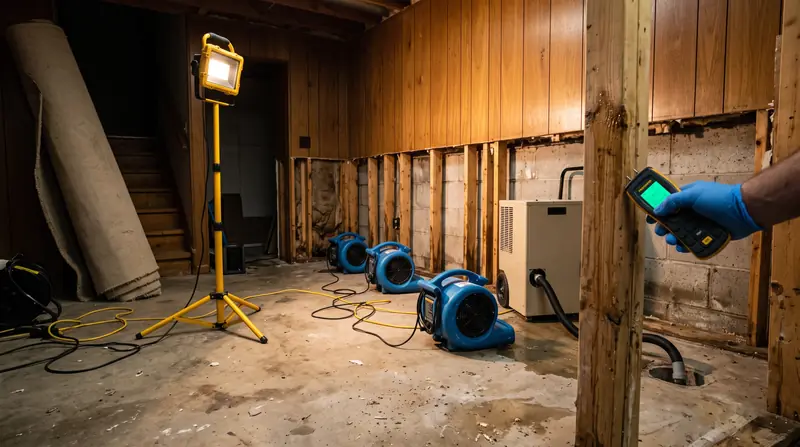
Dehumidifiers pull water from the air. High-speed fans, called air movers, push dry air across wet surfaces. On most clean-water jobs they run three to five days, loud and power-hungry. Ask who checks readings daily and when the equipment gets picked up once the readings are dry. The drying science is on the water mitigation page.

05

Step 5: Cleaning and Antimicrobial Treatment Inside the 24 to 48 Hour Mold Window

The EPA says wet materials should be dried within 24 to 48 hours to prevent mold growth. Wet surfaces get cleaned and treated; porous material that can't be saved is removed. A musty smell weeks after a leak was "fixed" is a job for mold remediation.

06

Step 6: Rebuild and a Final Walkthrough With Dry Readings in Writing

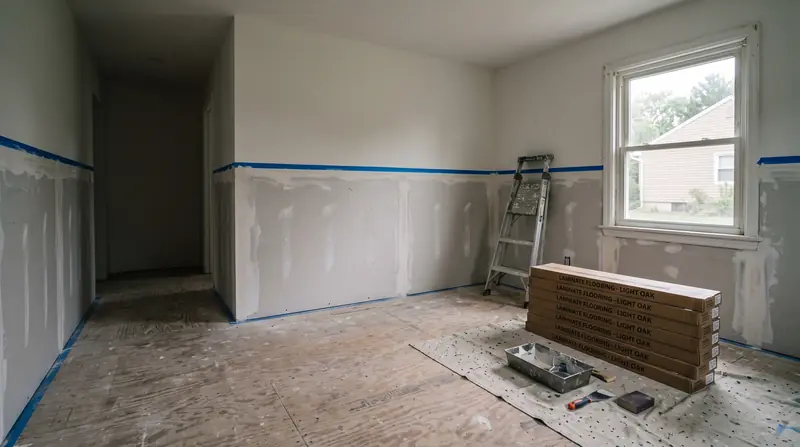
Once readings match the dry reference wall, the rebuild starts: drywall, paint, flooring, trim. Before walls close, ask for final readings in writing and a room-by-room walkthrough. Point out anything that still looks stained or smells musty before the walls close. The rebuild has its own page: water damage repair.

07

Clean, Gray or Black Water? The IICRC Categories That Change Every Hackensack Job

The IICRC S500 standard sorts water into three categories. The category decides what can be dried and what has to go, which makes it the biggest single factor in how big your job gets.

01

Category 1: A Burst Supply Line, Clean for the First Day or So

A burst supply line starts clean. After a day or so in carpet and drywall, picking up whatever it touches, it can slide into Category 2. One more reason speed matters.

02

Category 2: Dishwasher, Washer and Toilet Overflow Water

Gray water: dishwasher and washer discharge, toilet overflow without feces. It carries soap, food residue and bacteria, so carpet pad and other porous materials it soaks usually get removed.

03

Category 3 Water Loss: Sewage or River Floodwater, Handled as Contaminated

Sewage, floor-drain backups and river or storm floodwater are handled as contaminated: protective gear, removal of porous materials, disinfection. In Hackensack that includes water from the tidal Hackensack River along the city's east side. See sewage cleanup and storm and flood damage.

08

Before Any Crew Starts Work in Your Hackensack Home, Ask Where It's Coming From

Not every company that advertises water damage help in Hackensack is based near it. Some dispatch from Union or Middlesex County, and some from New York state, 40-plus minutes away via Route 17, and closed on Saturdays. That doesn't make them bad companies. But distance matters on a Saturday night with water in the ceiling. Ask where the crew is based, when they can realistically get there, and who you talk to after the deposit.

01

How Undercroft Restoration Water Damage Calls Work: You're Connected, a Local Company Does the Job

Undercroft Restoration is a referral service. When you call (201) 409-9820, you're connected to an independent, third-party restoration company that serves your area. That company inspects, writes the scope and does the work. Undercroft Restoration doesn't do the work, set prices or hold contractor licenses. Since no one can promise which crew picks up, this page gives you the questions to ask. For the bigger picture, see how the one-call line works for every service.

02

Four Questions for Any Water Damage Restoration Company on Your First North Jersey Call

Most jobs that go wrong go wrong in one of four ways: a price that changes, updates that stop, equipment left behind, or a crew that leaves too early. Ask these on the first call:

  1. Will I get a written scope before work starts? It stops the price from changing halfway through.
  2. Who updates me after the deposit? Get a name and a number.
  3. When is the equipment picked up? It should leave once the readings say dry, not days later.
  4. Will you walk me through the final dry readings? Readings in writing, room by room, before anyone closes a wall.
03

Ask for a Written Scope and IICRC Certification Before Anyone Tears Out Drywall

Objection: "Will they turn a small leak into a big bill?" Get the scope in writing first: rooms, materials coming out, equipment and how long. Any later change should be a written change order you approve.

Objection: "How do I know they're qualified?" New Jersey has no state license for water restoration; the working credential is IICRC certification. Anyone rebuilding drywall and floors must register as a home improvement contractor with the NJ Division of Consumer Affairs. Ask for the number and look it up.

09

Is Your Water Damage Restoration Service Covered? New Jersey Policies, Pipe Bursts and the Flood Exclusion

On bigger losses, insurance is usually the next question. In New Jersey it depends on where the water came from and how fast. This is general; your policy wording decides, and the insurance claims help page goes deeper.

01

Sudden Bursts Usually Qualify, Slow Leaks and Wear Usually Don't

Most homeowners, condo and renters policies cover sudden and accidental discharge: a split pipe, a burst washer hose, a heater that let go overnight. Slow leaks over weeks, wear and poor maintenance are usually excluded. Report quickly, since delay can hurt a claim too.

03

In New Jersey, Public Adjusters Are Licensed by DOBI; Your Restoration Crew Documents, It Doesn't Negotiate

Licensed public adjusters can negotiate a claim for you. A restoration company documents: photos, daily moisture logs, an itemized scope. Be wary of any contractor promising to "handle your claim."

10

Hackensack Water Damage & Restoration: One Job From First Call to Keys Back

About this example. Undercroft Restoration connects callers with independent companies and doesn't publish their customers' jobs. The story below is an illustrative example, not a record of a real job. It's built on a real event: the late-January 2026 deep freeze and the thaw damage News 12 New Jersey reported on in February. The steps and timing are typical for a job like this.

Example: Kitchen Line Split in the Freeze. Ceiling Came Down at the Thaw. Dry in Four Days.

A two-family house in the Fairmount section, late January 2026. Owner upstairs, tenant downstairs. On the coldest nights, the cold-water line to the upstairs kitchen sink, running up an outside wall, froze and split. The ice held it.

Sunday morning the heat caught up. By 7:30 the tenant heard dripping, then watched her kitchen ceiling darken and sag. The owner texted back that he had no idea what to do.

The tenant did. She shut the main beside the meter, flipped off the kitchen circuit, stepped out from under the ceiling and took photos. Then the owner called.

The thermal camera showed water had also run along the joists into the dining room ceiling. Wet ceiling drywall came down in both rooms, plus a flood cut on the kitchen's outside wall. Dehumidifiers and air movers ran four days, checked each morning against a dry bedroom wall, while a plumber replaced the split line.

On day four the readings matched. The adjuster got photos, the moisture log and the written scope in one packet. The owner's policy treated it as a sudden burst; the tenant's renters policy covered her rug and microwave.

The lesson: tag your main shutoff. Own a two-family? Show your tenant where it is this week.

11

Restoration Services: Water Damage, Mold, Sewage and Basements Across Bergen County

12

Serving Hackensack 07601 and Bergen County From Route 4 to I-80

Calls come in from across the Bergen County service area: off Route 4 and Route 17, along County Route 503, both sides of I-80, and over the Hackensack River bridges at Court Street, Midtown and Anderson Street.

Calls from Middlesex County, including Edison, Woodbridge and New Brunswick, are connected the same way. See the Middlesex County service area.

01

Hackensack Sections Covered: Fairmount, Prospect Avenue, Main Street and Johnson Avenue

In the city: the Fairmount section, the Prospect Avenue high-rise corridor, downtown along Main Street, and the Johnson Avenue area. For what's different in each, see water damage in Hackensack.

02

Towns Around Hackensack: Teaneck, Paramus, River Edge, Maywood, Lodi, Little Ferry and Fort Lee

Calls from the bordering towns are connected the same way: Bogota 07603, Hasbrouck Heights 07604, Little Ferry 07643, Lodi 07644, Maywood 07607, Paramus 07652, Ridgefield Park 07660, River Edge 07661, South Hackensack 07606, Teaneck 07666 and Teterboro 07608. Fort Lee, east along Route 4, is covered too.

13

Water Still Spreading? Call Now and Get Connected With a Restoration Crew Serving Hackensack

Need 24 hour water restoration help? Call (201) 409-9820. Calls answered 24/7. There's no obligation, and you'll be connected with an independent restoration company that serves your area. Ask them for a written scope before any work starts.

Questions

What Hackensack Homeowners, Renters and Landlords Ask About Water Damage

Still have a question?

Calls answered 24/7. Pick the number for your problem, then say your town and what happened.

How long does the whole job take, from drying to rebuild?

Drying usually takes three to five days on a clean-water loss, and it's finished when the moisture readings say so, not the calendar. Rebuild comes after, and its timing depends on how much drywall, flooring and cabinetry came out and how quickly your insurer approves the scope.

Can I stay in my apartment while the dehumidifiers and fans run?

Usually, yes, for a clean-water loss in part of the home. Expect steady noise day and night, extra warmth and a few circuits tied up. The exception is Category 3 water such as sewage: keep kids, older relatives and pets out until cleaning and disinfection are done.

Should I call a plumber or a restoration company first?

Stop the water first at the main valve. Then call both, whichever you reach first. A plumber fixes the pipe. A water damage specialist extracts, dries and documents the damage. Restoration crews often refer a plumber, so one call can get both moving.

My upstairs neighbor's leak ruined my ceiling. Whose insurance pays in New Jersey?

Usually the association or landlord covers the building's common parts, and your own HO-6 or renters policy covers your unit's interior and belongings. If the neighbor was negligent, your insurer can go after them. Check your master deed and policy, and see the insurance claims help page.

What affects the cost of water damage restoration in Bergen County?

Water damage restoration cost comes down to a handful of things: the water category (clean, gray or black), how many square feet got wet, what has to be removed, access, how much rebuild follows, and what your insurance covers. Call (201) 409-9820 and ask for a written scope before any work starts.

How soon can mold start after a pipe bursts?

The EPA says wet materials should be dried within 24 to 48 hours to prevent mold growth. After that, mold can start on drywall paper, carpet pad and wood framing, often out of sight. Notice a musty smell days after a leak? See the mold remediation page.

How do I keep the price from changing once work starts?

Get a written scope before work starts, listing rooms, materials to remove and equipment. Then agree that any change, such as more drywall coming out once walls are open, comes as a written change order you approve first. That one habit prevents most surprise bills.

How do I know the walls are really dry before they're closed up?

Ask for daily moisture readings compared with a dry, unaffected wall in the same home, often called the dry standard. Walls are ready when readings match it, not after a set number of days. Ask to see the final readings in writing before new drywall goes up.

Does homeowners insurance cover a burst water heater?

Water damage from a sudden tank failure is usually covered as sudden and accidental discharge. The tank itself, which simply wore out, usually isn't, and slow leaks from a corroded tank may be excluded. Check your policy wording, photograph the tank's label and the damage, and report it quickly.

Do you also handle water damage in Teaneck, Paramus and Fort Lee?

Yes. Calls from Teaneck, Paramus and Fort Lee are connected the same way, with a restoration company serving that town. Fort Lee's high-rises bring their own upstairs-unit questions, and each town page covers what's different there.

Call (201) 409-9820Water, Fire, Mold & Sewage