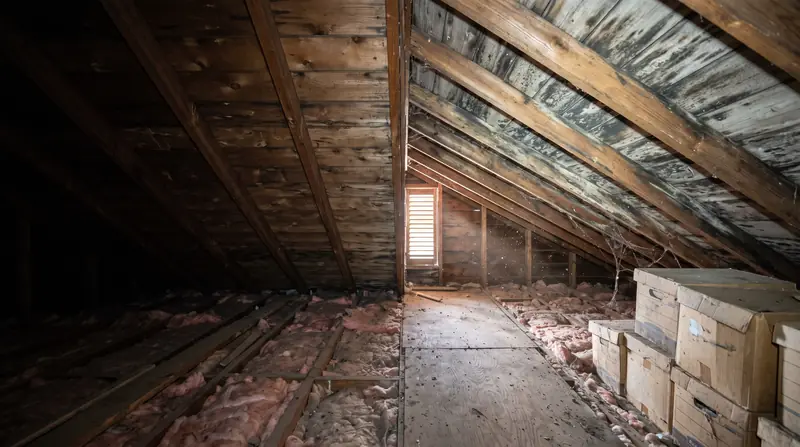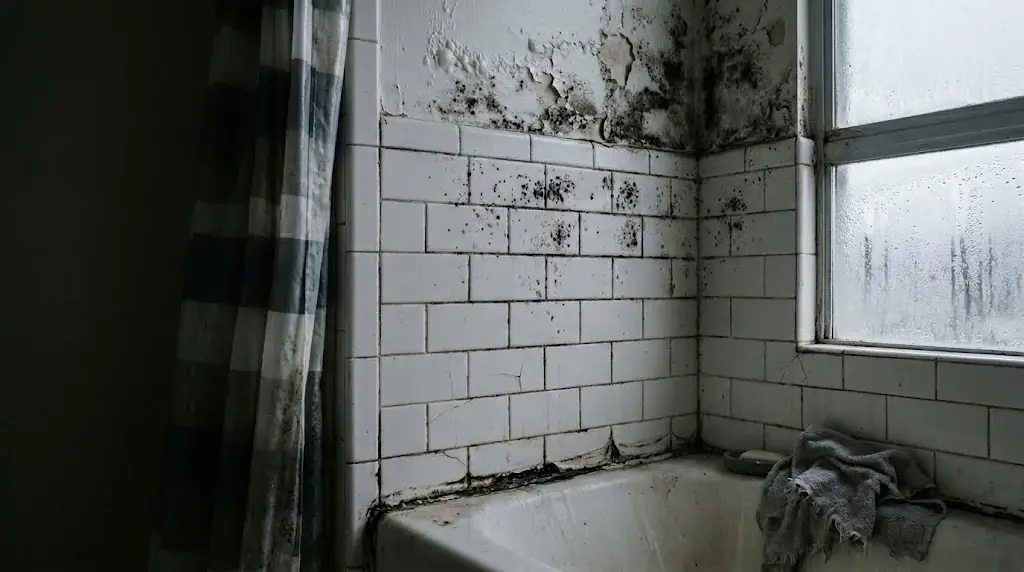
Black mold on the grout and ceiling above a bathroom shower
Calls answered 24/7

Black Mold Removal in Hackensack NJ

Found dark, slimy spots and read the word "toxic"? Take it seriously, but don't panic. What matters is how much there is, what it's growing on, and why it's wet.

Number for Water Damage, Fire, Mold & Sewage

Calls answered 24/7. No obligation to book.

Undercroft Restoration is a free referral service, not a restoration company. Calls are connected to independent local service providers that serve your area, and calls may be recorded. The work is done by those providers, not by this site.

  • One Call Connects You
  • No Obligation to Hire
  • Calls Answered 24/7
  • Facts Before Fear
Any typeCDC: remove it, whatever the species
ColorCan't tell you which mold it is
24 to 48 hrsDry wet materials to stop growth
30 to 50%EPA's ideal indoor humidity
01

Is It Really Black Mold? Why Color Can't Tell You, and Why Hackensack Homeowners Shouldn't Panic

"Black mold" usually means Stachybotrys chartarum, a greenish-black mold that grows on materials that stay wet for a long time, especially paper and wood: the paper facing on drywall, ceiling tiles, wood framing. It's the one people have read scary things about.

But plenty of common molds are dark too. You can't tell the species by color, and it doesn't change what you do. The CDC puts it plainly: you don't need to know the type of mold, and no matter what type is present, you need to remove it and fix the moisture.

So the useful questions aren't "Is it the black kind?" They're these: How big is the area? Is it on a hard surface or soaked into drywall and wood? What's keeping it wet? Those answers decide whether it's a sponge job or a remediation job.

01

Black Mold Testing: When a Lab Result Changes the Plan, and When It Doesn't

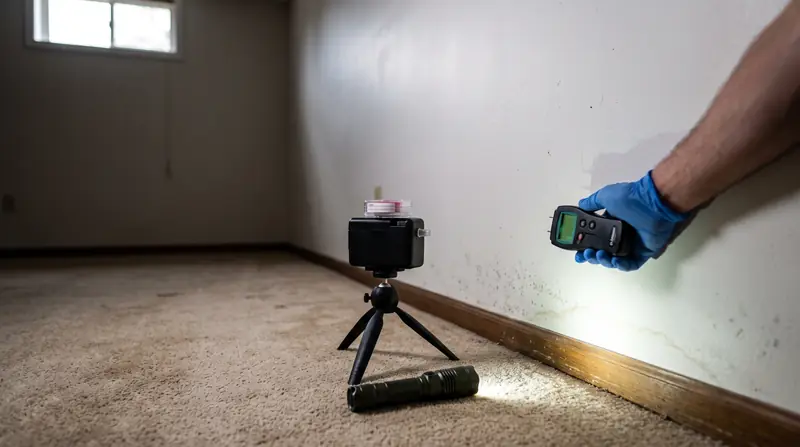
If you can see it, a lab test usually won't change what happens next. The EPA says sampling is unnecessary when growth is visible, and the CDC doesn't recommend routine testing. A lab test can make sense when you smell mold but can't find it, for a sale, or in a dispute with a landlord. More on when testing helps on the mold inspection and testing page.
02

Mold or Mildew?

Mildew is a surface growth, usually gray or white, sometimes dark, that sits on top of tile, grout, caulk or a shower curtain and wipes off with a cleaner. Mold that's grown into drywall, wood or caulk and comes back right after scrubbing is past the mildew stage.

02

Bathroom Black Mold in Pre-War Hackensack Apartments Without an Exhaust Fan

About 15 percent of Hackensack's housing was built before 1939, and many of those bathrooms were designed with a window, not a fan. In January nobody opens the window. Every shower puts steam into the room with nowhere to go, and dark growth shows up first in the corners of the ceiling, along the tub and behind the toilet. In a stacked apartment building, the bathroom above and below often share the same wall and pipes.

01

Grout and Caulk: Usually a Cleaning Job

Dark spots in grout lines and on the surface of caulk are usually cleanable. Scrub with detergent and water, dry the area, and improve ventilation. Caulk that's stained all the way through should be cut out and replaced, since mold grows into it.

02

Behind the Tile and Inside the Wall: Not a Cleaning Job

If tiles are loose, grout keeps cracking, or the wall behind the shower sounds hollow or feels soft, water has probably been getting behind the tile for a long time. Mold growing on the back of the backer board and the studs can't be reached by scrubbing. That section has to come apart.

03

Fans That Vent Into the Attic Instead of Outside

A bath fan that dumps warm, wet air into the attic instead of through the roof or a wall just moves the problem upstairs. It's a common find in older houses around Bergen County. If you see dark staining on the attic side of the roof, see basement and attic mold.

03

Behind the Washer, Under the Sink, on Basement Drywall: Where Else Black Mold Grows in Bergen County Homes

Stachybotrys needs a material that stays wet for a long time. That points to slow, hidden leaks, not a single spill:

  • Behind the washing machine, where a fill hose drips or the drain box leaks into the wall.
  • Under the kitchen sink, where a slow drain leak soaks the cabinet floor. Left long enough, it spreads from the sink base into the cabinet walls.
  • On basement drywall in a finished basement that takes on a little water every storm and stays damp.
  • On wood framing and subfloor under a leaking toilet or tub. Black mold in wood framing can often be cleaned off if the wood is still sound; soft, rotted wood gets replaced.

Stop the leak first. The water damage restoration page covers leaks inside the house, and basement and attic mold covers the damp spaces.

04

Who Should Stay Away During Cleanup: CDC's Higher-Risk Groups

The CDC says people with asthma, mold allergies, weakened immune systems or chronic lung disease face greater risk from mold exposure. In Hackensack, about 18 percent of residents are 65 or older, so plenty of households have someone to plan around.

If anyone in the home is in one of those groups, keep them out of the area during any cleaning or removal, and have someone else do the work. If you're worried about symptoms, talk to a doctor. This site isn't a medical source and can't tell you whether mold is affecting your health.

05

How Black Mold Remediation Works When It's More Than 10 Square Feet

The EPA's guidance is that most people can handle a moldy area smaller than about 10 square feet, roughly 3 by 3 feet. Bigger than that, or growing inside walls, and it's a job for a professional. Here's what that job should look like.

01

Step 1: Find and Stop the Moisture

The leak, the missing fan, the failed shower pan. Nothing else lasts until this is fixed.

02

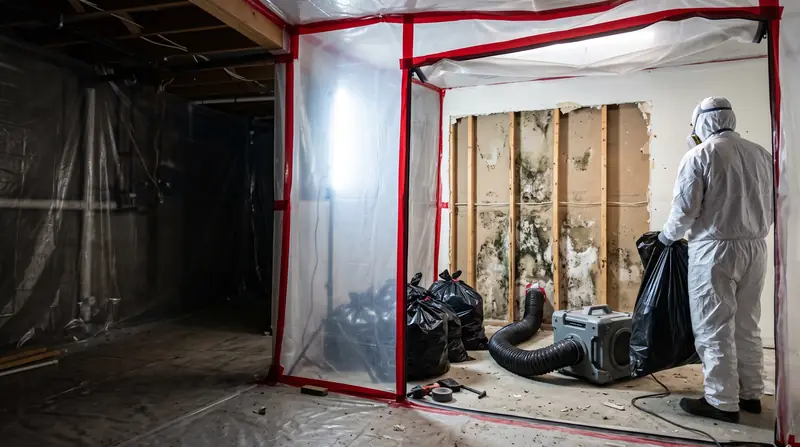
Step 2: Contain the Area With Plastic and HEPA Air Scrubbers

Plastic sheeting seals off the work area, and an air scrubber with a HEPA filter pulls air out of it so spores don't drift through the house during removal.

03

Step 3: Remove Moldy Drywall, Insulation and Caulk

Porous materials with growth are cut out, bagged inside the containment and carried out sealed. That includes drywall, insulation, ceiling tiles and failed caulk.

04

Step 4: HEPA Vacuum, Clean and Dry the Framing

Studs, subfloor and other sound wood get HEPA-vacuumed, scrubbed and dried. Moisture readings confirm the wood is dry before anything else happens.

05

Step 5: Rebuild Only After It's Dry

New backer board, drywall, tile and paint go in once readings are normal. Rebuild details are on the water damage repair page.

06

Black Mold Cleanup You Can Do Yourself on Tile and Glass, and Where to Stop

For small areas on hard surfaces, this is a reasonable DIY job:

  • Wear gloves, eye protection and an N95 mask. Open a window or run a fan.
  • Scrub tile, glass, metal or sealed surfaces with detergent and water, then dry them completely.
  • The EPA doesn't recommend bleach as a routine mold cleaner. If you use it, never mix it with ammonia or other cleaners.
  • Fix the moisture: run the fan, shorten showers, squeegee the walls, keep humidity between 30 and 50 percent.

Stop and call when:

  • It's on drywall, ceiling tiles, wood or carpet.
  • It's larger than about 10 square feet.
  • It came back within weeks of cleaning.
  • You smell mold but can't see it.
  • Anyone in the home is in a higher-risk group.
07

'Toxic Black Mold Abatement' Scare Pitches: Questions to Ask Before You Sign

The word "toxic" sells. Some companies use it to turn a small bathroom problem into a whole-house job. People worry about exactly that: one of the questions people ask AI assistants is whether the restoration industry is "full of upsells." The honest answer: a good company sizes the job to what it measures, not to the scariest word on the flyer.

Before you agree to a job like that, ask:

  • How many square feet of growth did you find, and where?
  • What's the moisture source, and who fixes it?
  • What exactly will be removed, and why?
  • Can I have a written scope before work starts?
  • Do you also do the testing? If so, would you be open to a second opinion?

How Undercroft Restoration Calls Work: You're Connected With a Local Mold Company

Undercroft Restoration is a referral service. When you call (201) 409-9820, you're connected with an independent, third-party company that serves your area. That company inspects, writes the scope and does the work. Undercroft Restoration doesn't do the work, set prices or hold mold credentials. For how the line works across every service, see the home page.

08

Tile Came Off the Shower Wall, Black Growth Behind It: One Hackensack Bathroom

About this example. Undercroft Restoration connects callers with independent companies and doesn't publish their customers' jobs. This is an illustrative example, not a record of a real job. It's built from Hackensack housing data (about 15 percent of homes built before 1939) and follows EPA and CDC guidance.

A pre-war walk-up apartment in Hackensack. The bathroom has a window, no fan. For two winters the tenant scrubs dark spots off the ceiling corners every few weeks. Then two tiles on the shower wall come loose in her hand, and the board behind them is soft and black.

She tells the super, who calls a mold company. The inspector finds high moisture readings across the lower half of the shower wall. The grout had been cracked for years, and every shower pushed water behind the tile.

The crew seals the bathroom with plastic and runs an air scrubber. About 20 square feet of tile and backer board come off. The studs behind have surface growth but are solid, so they're HEPA-vacuumed, cleaned and dried for three days. The ceiling spots turn out to be surface growth on paint and get cleaned.

The building installs an exhaust fan vented outside. New cement board, waterproofing membrane and tile go up. The ceiling gets mold-resistant paint.

The lesson: in a bathroom with no fan, the spots on the ceiling are a warning about the wall.

09

Beyond the Bathroom: Mold, Testing and Leak Help Across Bergen County

10

Black Mold Calls From Hackensack 07601 and Across Bergen County

Calls come from Hackensack's pre-war buildings, the Prospect Avenue high-rises, the Fairmount section and downtown, and from across the county. Calls from Teaneck, Paramus and Fort Lee are connected the same way. More on water damage in Hackensack and the full Bergen County service area.

Calls from Middlesex County, including Edison, Woodbridge and New Brunswick, are connected the same way. See the Middlesex County service area.

Call any time

Dark Spots Spreading? Call and Get Connected With a Bergen County Mold Company

Calls answered 24/7. For mold removal in Bergen County homes: have your town and where you see it ready when you call.

Undercroft Restoration is a free referral service, not a restoration company. Calls are connected to independent local service providers that serve your area, and calls may be recorded. The work is done by those providers, not by this site.

Pick the number for your problemServing Bergen and Middlesex Counties, NJ ยท Calls answered 24/7
Questions

What Bergen County Homeowners and Renters Ask About Black Mold

Still have a question?

Calls answered 24/7. Pick the number for your problem, then say your town and what happened.

Is black mold dangerous?

The CDC says mold can affect some people more than others, especially those with asthma, mold allergies, weakened immune systems or chronic lung disease. It recommends removing any mold, whatever the type. If you have health concerns, talk to a doctor.

How can I tell black mold from mildew?

Mildew sits on the surface of tile, grout or caulk and wipes off. Mold grows into drywall, wood or caulk, often looks fuzzy or slimy, and comes back quickly after cleaning. Color alone won't tell you.

Can I clean bathroom black mold myself?

Usually, if it's on tile, grout or glass and smaller than about 10 square feet. Use detergent and water, protect yourself, and fix the ventilation. If it's inside the wall or behind tile, get help.

Does bleach kill black mold?

On hard surfaces it can kill surface growth, but the EPA doesn't recommend it for routine cleanup, and on porous materials it often misses growth underneath. Never mix bleach with ammonia.

Should I leave home during removal?

If the work area is properly contained, most people can stay. People with asthma, mold allergies, weakened immune systems or lung disease may be better off elsewhere until removal is done.

What affects black mold removal cost?

How many square feet are affected, where it is (a shower wall, a ceiling, a basement), what has to be removed, how much containment is needed, and what fixing the moisture takes. Call (201) 409-9820 and ask for a written scope before any work starts.

Will it come back after it's removed?

Only if the moisture comes back. Fix the leak, vent the bathroom outside, and keep indoor humidity between 30 and 50 percent.

Do I have to tell buyers about black mold in New Jersey?

New Jersey's seller disclosure form asks directly whether you know of mold (question 9a) and of water leakage or dampness (question 9). Talk to your agent or attorney about your specific situation.

My landlord says it's only mildew. What now?

Put your concern in writing with photos. A neutral inspection report can settle what it is. For your rights, talk to a tenant attorney or legal aid. This isn't legal advice.

Does insurance cover black mold?

Usually only when the mold resulted from a covered, sudden water loss like a burst pipe, and many policies cap mold coverage. Mold from long-term leaks or humidity is usually excluded. Check your policy.

Call (201) 409-9820Water, Fire, Mold & Sewage