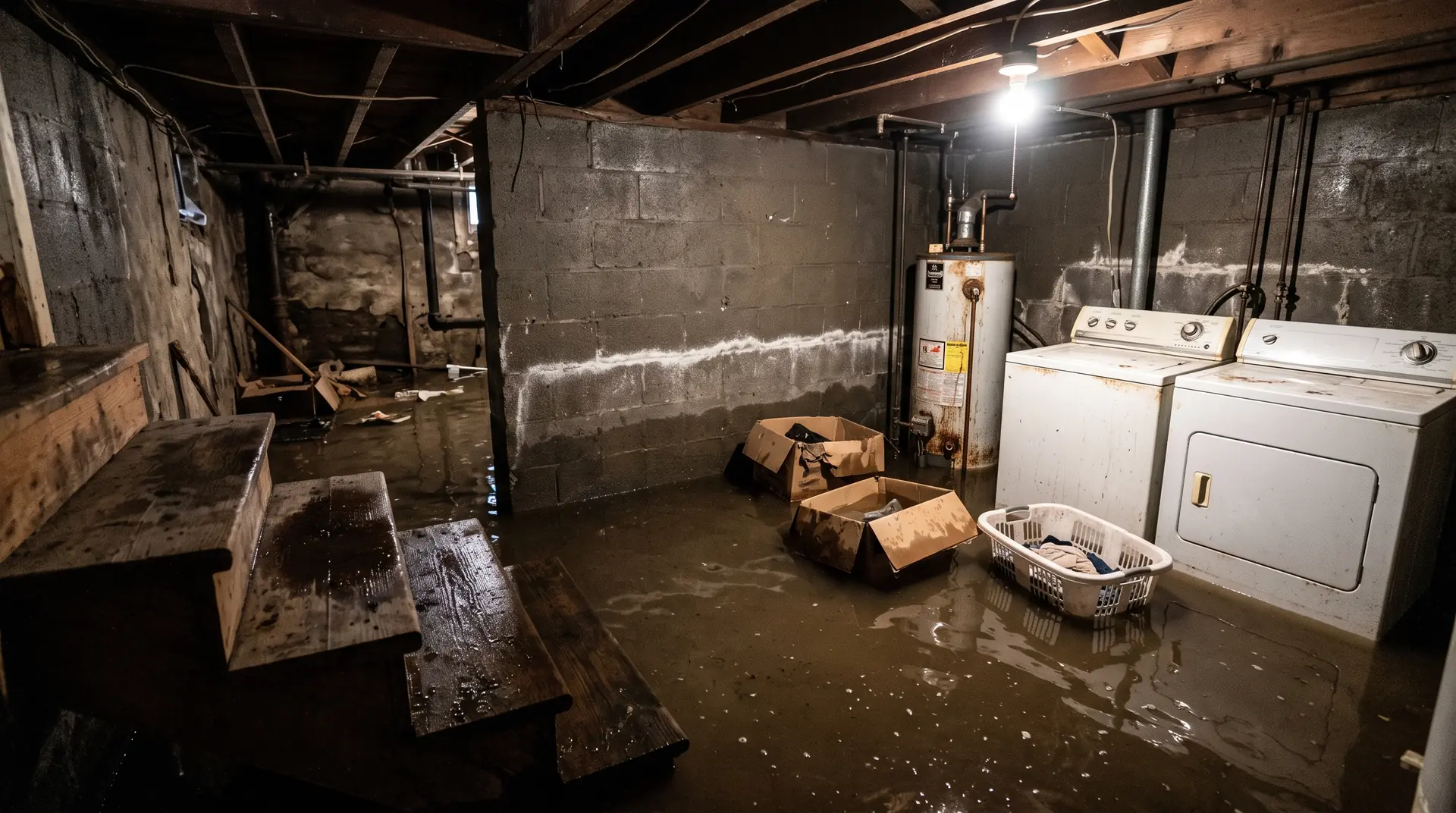
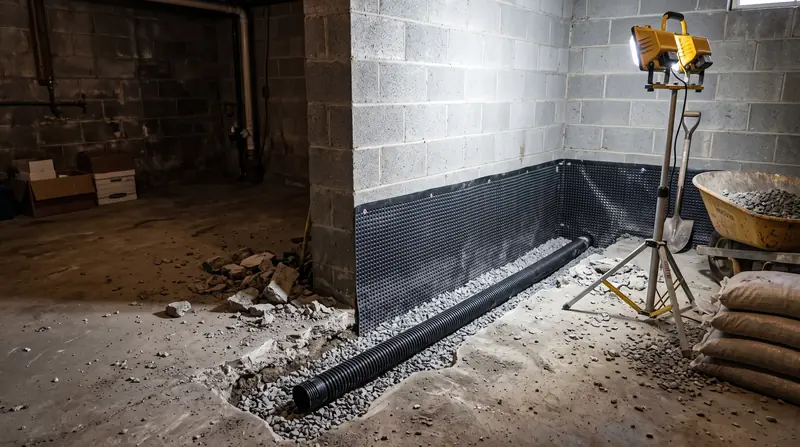
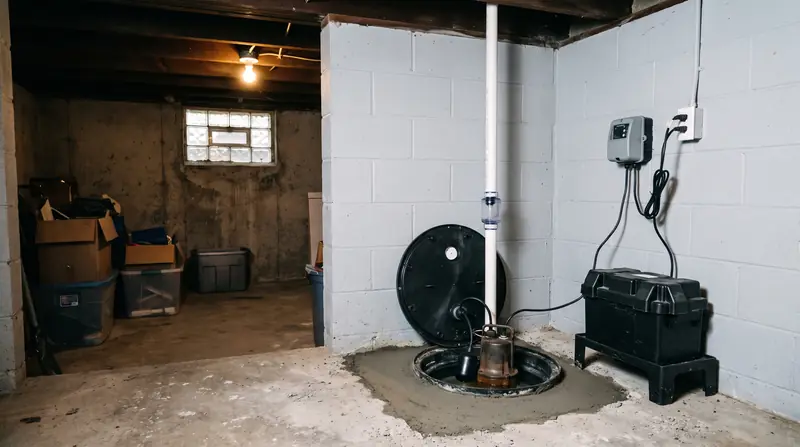
A sump pump sits in a pit in the lowest corner of the basement and pushes groundwater out before it reaches the floor. Most days you forget it's there. Then a storm dumps inches of rain on saturated ground, the pit fills faster than usual, and the one day the pump has to work is the day it doesn't.
Here's how it usually goes wrong.
Power Out, Pump Out: Storms That Knock Out the Electricity
No power, no pump. The storms that flood basements are often the same ones that take down power lines. After Sandy in 2012, NJ DEP and Rutgers researchers found that pump stations lost power and flooding in some upland areas lasted five days or more. At home, the fix is a battery backup or a water-powered backup pump, covered on the sump pump page.
Stuck Floats and Burned Out Motors
The float switch tells the pump when to turn on. If it hangs up on the pit wall or a cord, the pump never starts. Motors that have run hard for years burn out, often in the middle of the storm that finally overworks them. If your pump hums but doesn't move water, or cycles on and off constantly, it's telling you something.
Discharge Lines Frozen or Clogged in Winter
In January and February, the pipe that carries water away from the house can freeze solid where it exits the wall. The pump runs, but the water has nowhere to go and flows back into the pit. Leaves and ice at the outlet do the same.