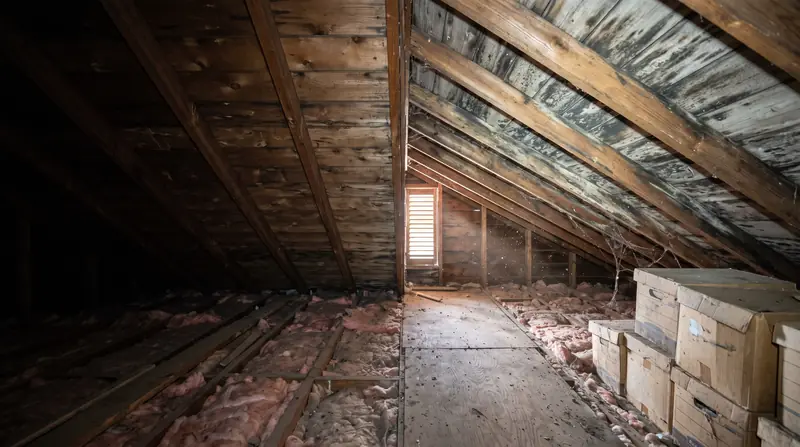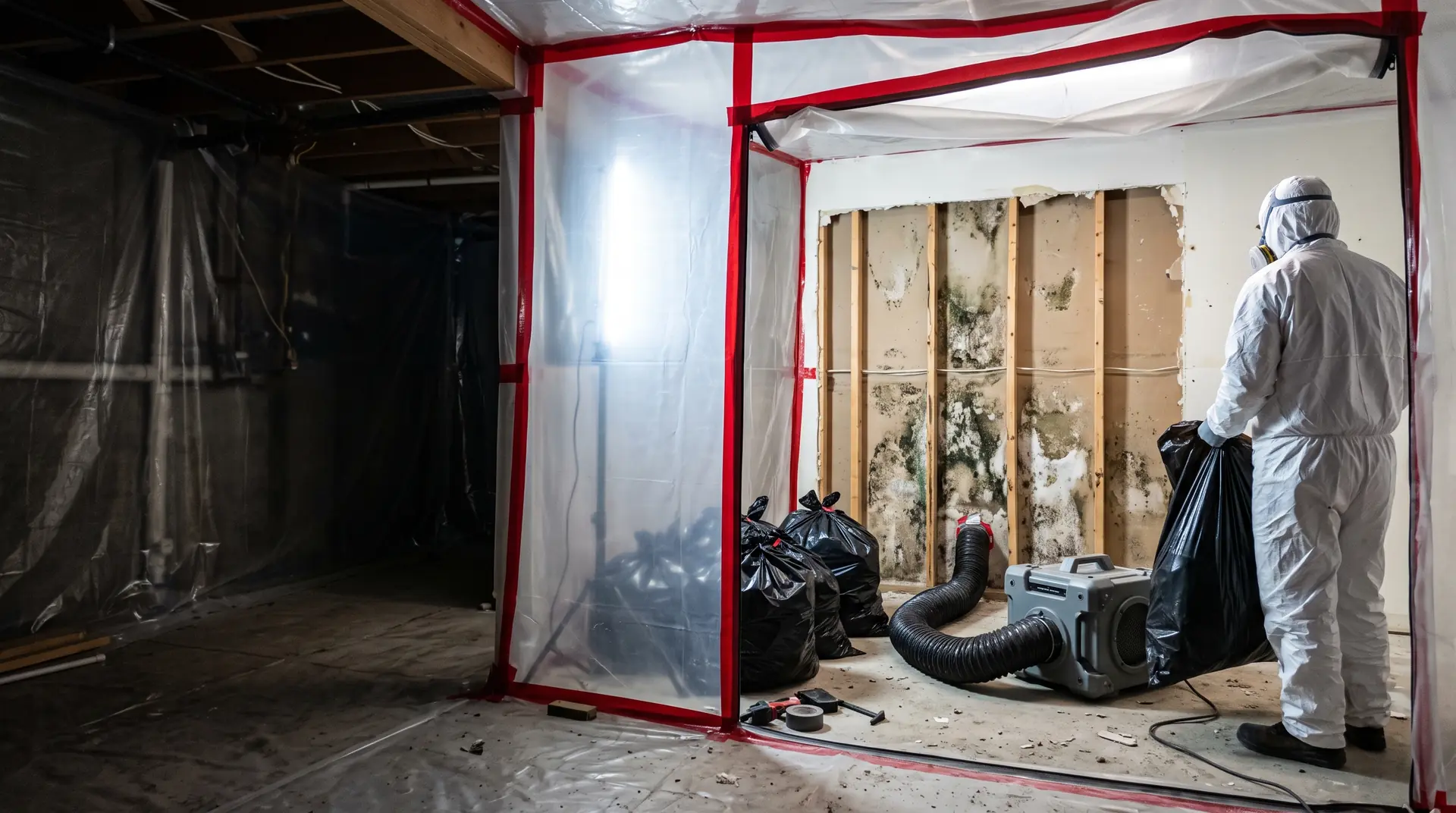
Mold on exposed wall studs inside a sealed plastic containment area
Calls answered 24/7

Mold Remediation in Hackensack NJ

A musty smell you can't place, spots behind the dresser, or mold that came back after the bleach? Removing it is half the job. Stopping the moisture that feeds it is the other half.

Number for Water Damage, Fire, Mold & Sewage

Calls answered 24/7. No obligation to book.

Undercroft Restoration is a free referral service, not a restoration company. Calls are connected to independent local service providers that serve your area, and calls may be recorded. The work is done by those providers, not by this site.

  • One Call Connects You
  • No Obligation to Hire
  • Calls Answered 24/7
  • Mold and Moisture Fixed
10 sq ftEPA's line for cleaning mold yourself
24 to 48 hrsTo dry wet materials before mold starts
30 to 50%EPA's ideal indoor humidity
AugustWhen Hackensack mold searches peak
01

Mold Removal and Mold Remediation: What's the Difference in a Hackensack Home?

People use the two words as if they mean the same thing. They don't, and the difference is why so much mold comes back.

Removal usually means cleaning off the growth you can see. Spray, scrub, wipe, done. On a small patch on a hard surface, that can be enough.

Remediation is the whole job:

  1. Find and fix the moisture that let mold grow.
  2. Seal off the area so spores don't spread through the house.
  3. Remove what can't be cleaned, like moldy drywall, insulation and carpet.
  4. Clean what can stay, like framing, concrete and hard surfaces.
  5. Dry everything, and check the result before the walls close up.

Skip step 1 and the mold grows back, no matter how well the rest was done. That's the pattern behind most of the "it came back" stories people tell about mold. In older Hackensack homes and apartment buildings, the moisture source is often hidden: a slow drip in a wall, a bathroom with no working fan, a basement that stays damp all summer.

02

Less Than 10 Square Feet? When EPA Says You Can Clean Mold Yourself, and When to Stop

Here's the honest answer most mold companies won't put on their website. The EPA says that if the moldy area is less than about 10 square feet, roughly a 3 by 3 foot patch, most people can handle it themselves. Fix the water problem first, wear gloves and an N95 mask, and keep the area ventilated.

01

What You Can Safely Scrub

Hard, non-porous surfaces: tile, glass, sealed countertops, metal, hard plastic, sealed concrete. Scrub with detergent and water, then dry the surface completely. The EPA doesn't recommend bleach as a routine mold cleaner. If you do use it, never mix it with ammonia or other cleaners; the fumes are toxic.
02

Why Bleach on Drywall Often Comes Back

Drywall paper, ceiling tiles, carpet and unsealed wood are porous. Mold grows into them, not just on them. Bleach can whiten the surface while the growth underneath survives, and the water in bleach adds moisture. If the wall stays damp, the spots return in a few weeks.

03

Signs It's Bigger Than a Weekend Job

  • The area is larger than about 10 square feet, or keeps spreading.
  • You smell mold but can't find it: it's likely inside a wall, under a floor or in ductwork.
  • It came back after you cleaned it.
  • It followed sewage or floodwater.
  • It's in your heating or cooling system.
  • Someone in the home has asthma, a mold allergy, a weakened immune system or a chronic lung condition. The CDC names these groups as higher risk.
03

Where Mold Grows in Bergen County Homes: Inside Walls, Bathrooms, Wood Framing and Ducts

July through September in Bergen County is hot and humid, and local mold searches peak in August. Add pre-war plaster, stacked apartment buildings and a lot of bathrooms with weak or no ventilation, and you get predictable hiding spots. Mold removal inside walls is the most common job that surprises people, because the wall looked fine.

01

Inside Walls After a Leak That Was Never Dried

Indoor mold usually grows after a water event that wasn't dried properly, like a slow leak under the kitchen sink that spreads into the cabinet. A leak that's fixed but not dried leaves wet drywall and insulation inside the wall for weeks, which is plenty of time. If you've had a leak recently, see water mitigation for how drying should be done.

02

Bathrooms Without Real Ventilation

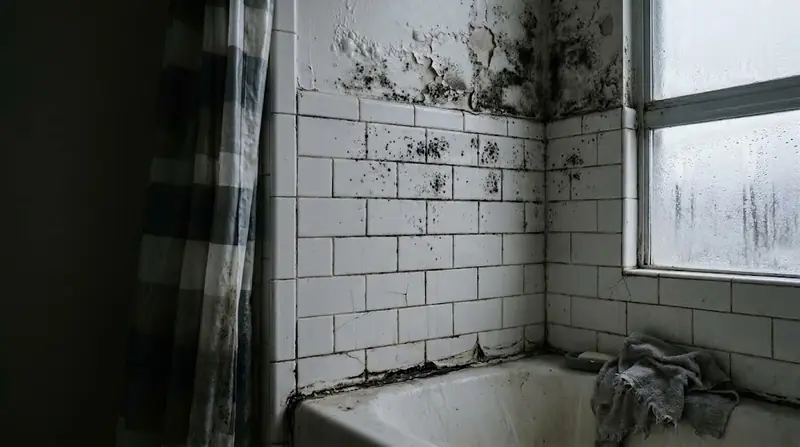
Many older Hackensack bathrooms have a window instead of an exhaust fan, and in winter nobody opens it. Steam goes into the ceiling and the grout. Small bathroom mold remediation jobs often start with the caulk and end behind the tile. If you're worried the dark growth in your shower is "black mold," see black mold removal.

03

Wood Framing, Subfloors and Closets

Closets on outside walls stay cool and still, and clothes pressed against the wall trap moisture. A bedroom closet on an outside wall can hide mold for months. Wood framing and subfloors can usually be cleaned and kept if the wood is still sound, which is why framing gets HEPA-vacuumed and scrubbed rather than torn out.

04

Air Conditioners and Ductwork

Condensation drip pans, air handlers and ducts running through humid basements or attics can grow mold and spread the smell through the house. Cleaning growth inside HVAC equipment is its own specialty. Duct cleaning alone doesn't fix it if the moisture source stays. Ask the company whether they handle HVAC mold or bring in someone who does.

04

How Professional Mold Remediation Works, From Plastic Walls to Clearance

The IICRC's mold standard, S520, describes the process. Here it is in plain words. You'll also see this sold as mold mitigation services or mold abatement; the steps should be the same.

01

Step 1: Find the Moisture Source First

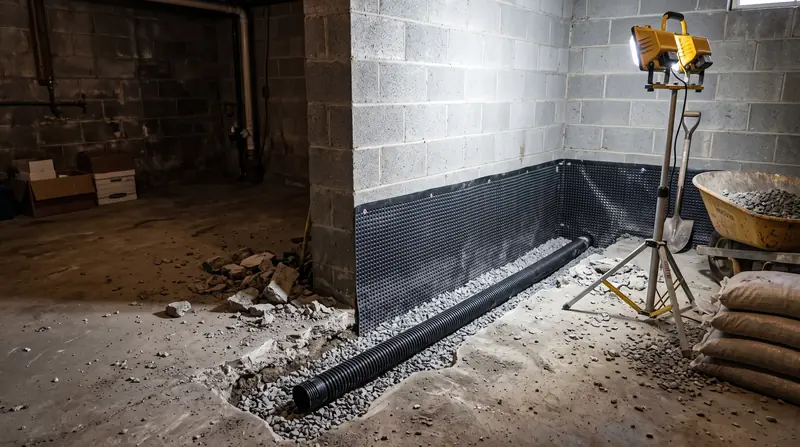
A leaking pipe, a roof or window leak, high humidity, or groundwater coming through the foundation. No source fixed, no lasting result. If it's a leak, see water damage restoration. If water comes through the basement walls, see basement waterproofing.

02

Step 2: Containment and Negative Air

Plastic sheeting seals off the work area, a "plastic wall" between the mold and the rest of the house. Mold containment keeps spores from drifting into the rest of the house during removal. An air scrubber with a HEPA filter pulls air out of the contained area and filters it, so air flows in, not out.

03

Step 3: Remove What Can't Be Cleaned

Moldy drywall, insulation, carpet and ceiling tiles are cut out, bagged inside the containment and carried out sealed. Crews usually cut a little past the visible growth.

04

Step 4: HEPA Vacuuming and Cleaning the Framing

Studs, joists, subfloor and concrete get HEPA-vacuumed, scrubbed and wiped. Ask to see the framing before it's covered again. That's the step that separates remediation from a coat of paint.

05

Step 5: Dry, Then Verify Before Walls Close

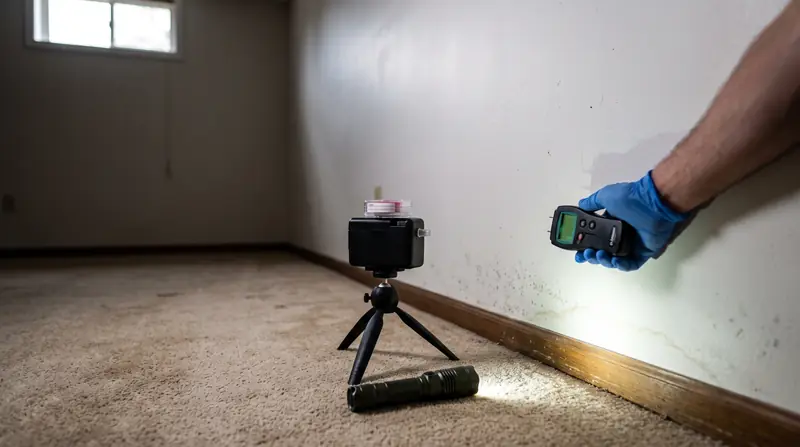
Everything gets dried and checked with a moisture meter. A visual check confirms no growth remains. Some owners also want clearance testing by an independent inspector before the walls close; see mold inspection and testing.

05

Renters, Landlords and Home Sales: Mold Rules Hackensack Residents Run Into

About 64 percent of Hackensack households rent, so mold is often a landlord and tenant question as much as a cleanup question. What follows is general information, not legal advice.

01

Renters: NJ Has No Mold Statute, but Landlords Must Keep Units Habitable

New Jersey doesn't have a specific mold law for rentals. But since the state Supreme Court's 1970 decision in Marini v. Ireland, landlords have a duty to keep units habitable, and serious mold tied to a leak or moisture problem can fall under that. If you rent, report mold and musty smells to your landlord or super in writing, with photos and dates. If nothing happens, your city's code enforcement office is the next step.

02

Landlords: Fix the Leak and the Mold Together

A tenant's complaint about a mold smell is how a lot of landlord calls start. Cleaning the mold without fixing the leak behind it means a second complaint is coming. Get the source found and fixed, then have the growth removed and the area dried, and keep records for the file.

03

Selling a Home: NJ's Disclosure Form Asks About Mold and Water

New Jersey's seller disclosure form, updated in February 2024, asks sellers directly about water leakage or dampness (question 9) and about mold (question 9a). Buyers' inspectors often find it anyway. Finishing the job before the closing date can save a sale. If you're selling, handle it early and keep the paperwork.

06

No State Licence for Mold in New Jersey: How to Vet Mold Companies

New Jersey doesn't license mold work at the state level. The working credential is IICRC mold certification. Companies doing home improvement work, which includes replacing drywall and flooring after mold removal, must register with the NJ Division of Consumer Affairs. Ask for both.

01

Mold Removal Services: Check the Company, Not the Badge

Years-in-business claims and badges are easy to put on a website and hard to check. That doesn't prove bad work, but it's a reason to check the company, not the badge: its registration, its insurance, and who actually shows up.

02

Mold Abatement Services vs Remediation: Same Job, Different Word

"Abatement" is a word borrowed from asbestos and lead work. In practice, "abatement" and "remediation" describe the same job: containment, removal, cleaning, drying and verification. Judge the steps, not the name.

03

How Undercroft Restoration Calls Work: You're Connected With a Local Mold Company

Undercroft Restoration is a referral service. When you call (201) 409-9820, you're connected with an independent, third-party company that serves your area. That company inspects, writes the scope and does the work. Undercroft Restoration doesn't do the work, set prices, or hold mold certifications or contractor licenses. For how the line works across every service, see the home page.

07

Mold Cleanup Services for Recurring Growth: Why It Comes Back in Hackensack Basements and Baths

"Can mold grow back after remediation?" is one of the most common questions people ask. Yes, if the moisture comes back. The usual culprits here:

  • Basements that take on water every storm or stay damp all summer. The fix is drainage or basement waterproofing, plus a dehumidifier.
  • Bathrooms with no exhaust fan, or a fan that vents into the attic instead of outside.
  • Closets and corners on cold outside walls where air doesn't move.
  • Attics where bath fans dump warm, wet air, covered on the basement mold page.

The EPA suggests keeping indoor humidity between 30 and 50 percent. A basic hygrometer from a hardware store tells you where you stand.

08

Mold Eradication Isn't the Goal: What a Realistic Clean Result Looks Like

Nobody can make a house mold-proof. Mold spores are everywhere, outdoors and in, all the time. Any company promising a house with no mold forever is overselling. The realistic goal is removing active growth, fixing the moisture, and leaving the area clean, dry and checked.

That's also the honest answer to "Is paying for mold removal a rip-off?" It is when you pay for spraying and painting without a moisture fix. It isn't when the source is found, the damaged material comes out, and the area is dried and verified.

09

A Tenant's Musty Closet, a Hidden Leak and Mold Behind the Wall: One Bergen County Job

About this example. Undercroft Restoration connects callers with independent companies and doesn't publish their customers' jobs. This is an illustrative example, not a record of a real job. It's built from Hackensack housing data (about 64 percent of households rent) and follows EPA and CDC guidance.

A landlord owns a three-family in Hackensack. The second-floor tenant emails in August: the bedroom closet smells musty and her clothes smell too. The landlord looks and sees nothing on the walls.

A mold company comes out. The moisture meter reads high on the closet's back wall. That wall backs onto the bathroom, and a slow leak at the shower valve has been dripping inside the wall for months. A plumber fixes the valve first.

Then the crew seals off the closet and part of the bedroom with plastic and sets up an air scrubber. About 16 square feet of drywall comes out, with dark growth on the back side and on two studs. The studs are HEPA-vacuumed and cleaned. Insulation goes. The wall cavity dries for three days until readings match a dry wall in the next room.

New drywall goes up, the tenant's clothes are laundered, and the landlord keeps the photos, the plumber's invoice and the moisture readings in the building file.

The lesson: the smell was the only warning, and the leak was the real problem.

10

Mold Clean Up Services Connected to Water, Testing and Waterproofing Help in Bergen County

11

Mold Calls From Hackensack 07601 and Across Bergen County

Calls come from the Prospect Avenue high-rises, the pre-war homes in the Fairmount section, downtown apartments on Main Street and the Johnson Avenue area. Calls from Teaneck, Paramus and Fort Lee are connected the same way. More on water damage in Hackensack and the full Bergen County service area.

12

Found Mold or Can't Shake the Smell? Call and Get Connected With a Bergen County Mold Company

Looking for mold remediation NJ homeowners can reach by phone? Call (201) 409-9820. Calls answered 24/7. For mold removal in Bergen County homes: have your town and where you see or smell it ready when you call.

Questions

What Bergen County Homeowners and Renters Ask About Mold

Still have a question?

Calls answered 24/7. Pick the number for your problem, then say your town and what happened.

How long does mold remediation take?

Small jobs, like one closet wall, often take a day or two plus drying time. Larger jobs involving several rooms, an attic or a basement can take a week or more. The moisture fix and drying often take longer than the removal itself.

Can I stay home during the work?

Usually, yes, if the work area is properly contained and you stay out of it. People with asthma, mold allergies, weakened immune systems or chronic lung disease may be better off elsewhere during removal.

Does bleach kill mold?

It can kill surface mold on hard surfaces, but the EPA doesn't recommend it for routine mold cleanup. On porous materials like drywall it often misses growth underneath. Never mix bleach with ammonia or other cleaners.

What should I throw away after remediation?

Porous items that grew mold and can't be cleaned, like mattresses, upholstered furniture, carpet, cardboard and some books. Hard items can usually be cleaned. Clothes and fabrics can often be laundered.

Can mold grow back after it's removed?

Yes, if the moisture comes back. Fix the leak, ventilate bathrooms, and keep indoor humidity between 30 and 50 percent.

Do I need to test before removal?

Usually not if you can see it. The CDC doesn't recommend routine mold testing, because you don't need to know the type to remove it. Testing can help when you smell mold but can't find it. See mold inspection and testing.

What affects the cost of mold remediation?

How large the affected area is, where it is (a wall, an attic or a crawl space), how much containment it needs, what has to be removed, and what it takes to fix the moisture. Call (201) 409-9820 and ask for a written scope before any work starts.

Does homeowners insurance cover mold?

Usually only when the mold was caused by a covered, sudden water loss, like a burst pipe, and many policies cap mold coverage. Mold from long-term leaks or humidity is usually excluded. Check your policy.

My landlord won't fix the mold. What can I do?

Put your complaint in writing with photos and dates, and keep copies. If nothing changes, contact your city's code enforcement office. For your specific rights, talk to a tenant attorney or legal aid. This isn't legal advice.

Is it worth paying a professional to remove mold?

For a small patch on a hard surface, often not. For growth inside walls, larger areas, recurring mold or anyone at higher risk in the home, yes, as long as the job includes finding and fixing the moisture.

Call (201) 409-9820Water, Fire, Mold & Sewage