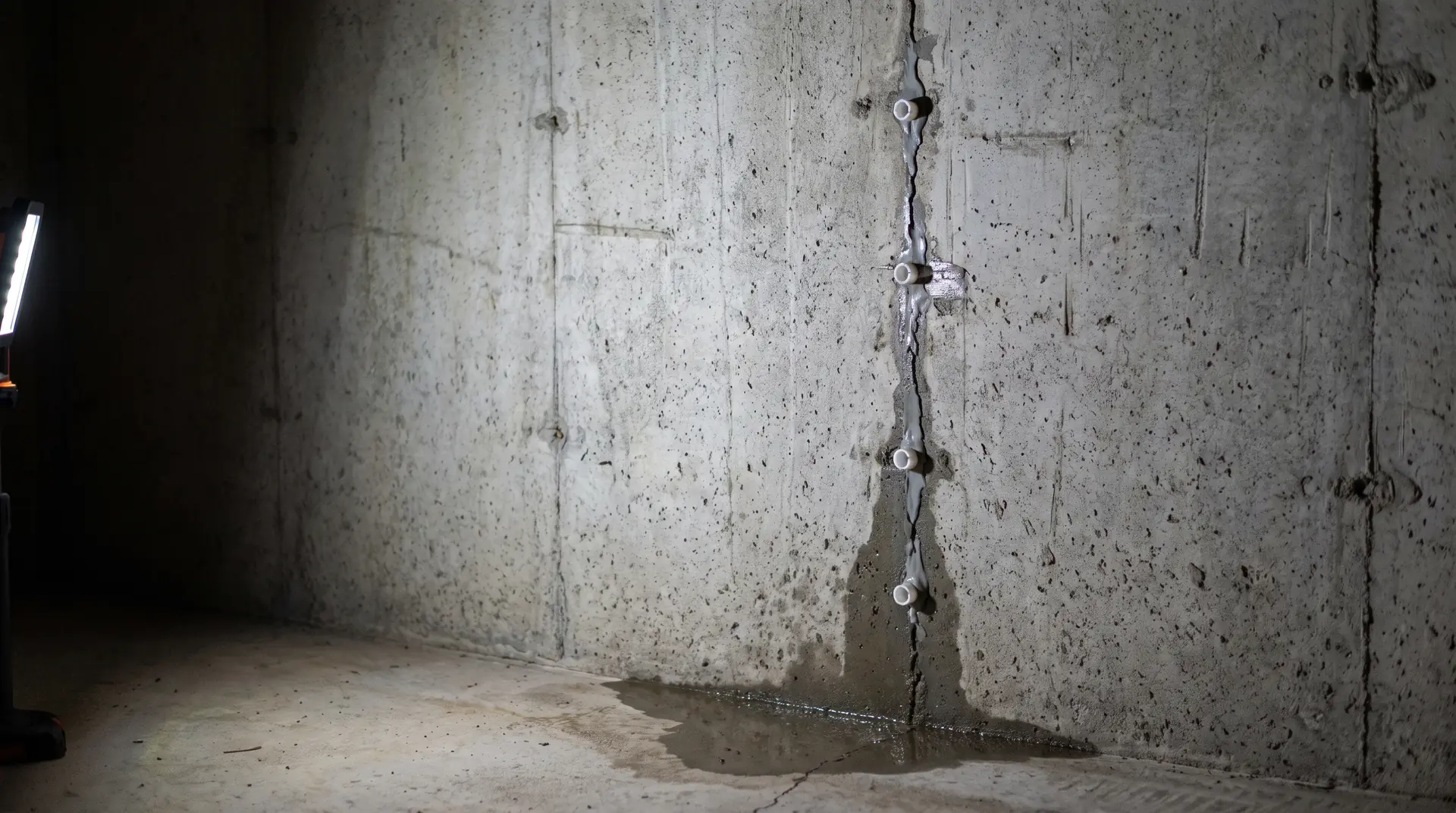
Injection ports sealed along a leaking crack in a concrete basement wall
Calls answered 24/7

Foundation Crack Repair in Hackensack NJ

A thin line down the basement wall, or one that leaks every time it rains? Most foundation cracks are about water, not collapse, but a few need an engineer's eye.

Number for Foundation Crack Repair

Calls answered 24/7. No obligation to book.

Undercroft Restoration is a free referral service, not a restoration company. Calls are connected to independent local service providers that serve your area, and calls may be recorded. The work is done by those providers, not by this site.

  • One Call Connects You
  • No Obligation to Hire
  • Calls Answered 24/7
  • Leaks and Cracks Sealed
36.2%Hackensack homes built 1940 to 1969
~26°FJanuary lows: freeze-thaw on walls
~590Monthly U.S. searches: are cracks normal
HorizontalCrack? Engineer first
01

Are Foundation Cracks Normal? Reading the Cracks in a Hackensack Basement

It's one of the most searched questions about houses, and the honest answer is: many are. Concrete shrinks as it cures, and almost every poured foundation has a few small cracks. What matters is the direction, the width, whether it's growing, whether it leaks, and whether the wall on either side has moved.

A simple habit helps. Photograph the crack with a ruler beside it, mark its ends with a pencil and the date, and check it again after a season. A crack that stays the same is telling you something different from one that gets longer or wider.

01

Hairline Vertical Cracks in Poured Walls: Usually Shrinkage

A thin, roughly vertical crack in a poured concrete wall, the same width top to bottom, is usually a shrinkage crack. It's rarely a structural concern. The most common problem it causes is water: in wet weather it can let groundwater seep through.

02

Stair-Step Cracks in Block Walls From the 1940s to 1960s

About 36 percent of Hackensack homes were built between 1940 and 1969, and many sit on concrete block. Block walls crack along the mortar joints, often in a stair-step pattern. A thin stair-step crack with no movement is common in older block. If the blocks on one side have shifted out of line, the crack is wide, or it's growing, have a structural engineer look at it.

03

Horizontal Cracks and Bowing: Call a Structural Engineer First

A horizontal crack running along a block or poured wall, especially with the wall bowing inward, can mean soil pressure is pushing on the foundation. That's a structural question, not a patching job. Before any contractor quotes a fix, get an evaluation from a structural engineer licensed in New Jersey. No one can diagnose a crack from a web page, and no one should try without seeing the wall.

02

Why Cracks in Foundation Walls Leak in the Hackensack Valley

A crack is just a path. What pushes water through it is the ground outside. Much of the Hackensack valley sits on old glacial lake clay that drains slowly, so after a long rain the soil against the foundation stays saturated and presses water into every opening. The full story of why local basements leak is on the basement waterproofing page.

Weather makes it worse. Hackensack gets about 47 inches of rain a year, and January nights average around 26°F. Water that seeps into a crack in winter can freeze and expand, and each freeze-thaw cycle can open it a little more. A crack that was dry for years can start leaking after a hard winter.

03

Epoxy or Polyurethane Injection: How a Leaking Crack in Foundation Walls Gets Sealed

For a leaking crack in a poured concrete wall, the standard fix is injection from the inside. Small ports are set along the crack, the surface is sealed over, and liquid resin is pumped in under pressure until it fills the crack through the full thickness of the wall. Sealing foundation cracks this way stops water at the crack itself, without digging outside.

01

Polyurethane for Active Leaks

Polyurethane foams and expands as it meets water, so it's the usual choice for cracks that are actively leaking. It stays flexible, which helps if the crack moves slightly with the seasons.

02

Epoxy When Strength Matters

Epoxy cures hard and bonds the two sides of the crack together, restoring some strength. It's used on dry, stable cracks where structural bonding matters, usually with an engineer's input. It doesn't handle wet, active leaks as well as polyurethane.

03

Why Block Walls Usually Need Drainage, Not Injection

Injection works in poured concrete because the crack is a single, solid path. A block wall is hollow; water that enters one crack spreads through the cores and comes out somewhere else. That's why leaking block walls are usually handled with an interior drain along the base of the wall. See french drains.

04

Cracked Foundation Repair When the Wall Is Moving

When a wall is bowing, leaning or has shifted, the fix is structural, not a sealant. Depending on what an engineer finds, cracked foundation repair can mean steel or carbon-fiber bracing on the inside of the wall, wall anchors, or in severe cases excavating and rebuilding part of the wall. This work should follow an engineer's plan, and under New Jersey's construction code it usually needs a permit. Repair without that plan is guesswork.

05

Foundation Wall Repair Beyond Cracks: Efflorescence, Spalling and Crumbling Block

Older foundations show other kinds of wear:

  • Efflorescence: white, chalky deposits left as water passes through the wall and evaporates. It's a moisture sign, not damage in itself.
  • Spalling: the face of concrete or block flaking or popping off, often from repeated freeze-thaw with water in the wall.
  • Crumbling block or mortar: soft, sandy mortar joints or block faces that break away, common in very old or very wet walls.
  • Failed parging: the cement coating on the outside of a block wall peeling off.

Concrete foundation repair for these starts with stopping the water that's causing it, then repointing mortar, patching spalled areas or replacing badly damaged block. Soft or deteriorating block over a large area deserves an engineer's opinion.

06

Cracks in the Basement Floor: When They Matter

A crack in basement floor slabs is very common. Most are shrinkage cracks, and since the slab isn't holding up the house, they're usually cosmetic. They matter when water comes up through them in wet weather (that's groundwater pressure; see basement waterproofing), when one side is higher than the other, or when they keep widening. Floor cracks that only leak during heavy rain can be sealed, but relieving the water pressure underneath is the longer-lasting fix.

07

Before You Sign for Foundation Work in New Jersey

Crack repair is home improvement work under New Jersey law. The Division of Consumer Affairs checklist says contractors must register every year and show the registration number on ads, contracts and vehicles. For all but very small jobs, the contract must be in writing, with start and completion dates and insurance details, and you can cancel before midnight of the third business day after receiving it. For structural work, ask for the engineer's letter and confirm who pulls the permit.

How Undercroft Restoration Calls Work: You're Connected With a Local Foundation Contractor

Undercroft Restoration is a referral service. When you call (201) 778-9785, you're connected with an independent, third-party contractor that serves your area. That company inspects, quotes and does the work. Undercroft Restoration doesn't do the work, set prices, hold contractor registrations or give engineering advice. For how the line works across every service, see the home page.

08

One Leaking Crack by the Laundry Sink: A Bergen County Injection Repair

About this example. Undercroft Restoration connects callers with independent companies and doesn't publish their customers' jobs. This is an illustrative example, not a record of a real job. It's built from local climate data (freeze-thaw winters, about 47 inches of rain a year) and the common case of a shrinkage crack in a poured wall.

A 1970s house in Bergen County with a poured concrete basement. For years there's been a thin vertical crack behind the laundry sink. After a hard winter, it starts leaving a wet streak down the wall and a small puddle every heavy rain.

The owner photographs it with a ruler: under a sixteenth of an inch, straight, no offset between the two sides. A contractor agrees it looks like a shrinkage crack that's started leaking, not a structural problem.

The fix is a polyurethane injection from inside. Ports go in along the crack, the surface is sealed, and resin is pumped in from the bottom up until it shows at the next port. Once it cures, the ports are trimmed off. The owner also extends the downspout at that corner of the house, which had been dumping water right against the wall.

The next storm, the wall stays dry.

The lesson: a small leaking crack in a poured wall is usually a small, specific fix.

09
02

Block Walls Weeping? French Drains

Interior drains for hollow block walls: french drains.

10

Foundation Calls From Hackensack 07601 and Across Bergen County

Calls come from Hackensack's single-family streets in the Fairmount section and the Johnson Avenue area, and from towns across the county. Calls from Teaneck, Paramus and Fort Lee are connected the same way. More on water damage in Hackensack and the full Bergen County service area.

Calls from Middlesex County, including Edison, Woodbridge and New Brunswick, are connected the same way. See the Middlesex County service area.

Call any time

Crack Leaking Again? Call for Foundation Crack Repair and Get Connected in Bergen County

Calls answered 24/7. Have your town, a photo with a ruler, and whether it leaks ready when you call.

Undercroft Restoration is a free referral service, not a restoration company. Calls are connected to independent local service providers that serve your area, and calls may be recorded. The work is done by those providers, not by this site.

Pick the number for your problemServing Bergen and Middlesex Counties, NJ · Calls answered 24/7
Questions

What Bergen County Homeowners Ask About Foundation Cracks

Still have a question?

Calls answered 24/7. Pick the number for your problem, then say your town and what happened.

Is a cracked foundation dangerous?

Most cracks aren't. Thin vertical shrinkage cracks are common. Horizontal cracks, bowing walls, shifted blocks, or cracks that keep growing need a structural engineer's evaluation before any repair.

How wide is too wide for a foundation crack?

There's no single number that applies to every house. Width matters along with direction, offset between the two sides, and whether it's growing. If you're unsure, or it's wider than a hairline and changing, have an engineer look.

Can I seal a foundation crack myself?

Surface patches and caulks sold for DIY use often fail on leaking cracks, because water pushes them off from behind. Injection through the full wall thickness is the reliable fix for a leaking crack in poured concrete.

What affects the cost of repairing a crack?

The length of the crack, poured concrete or block, polyurethane or epoxy, how easy the wall is to reach (finished walls add work), and whether structural repair is needed. Call (201) 778-9785 and ask for a written scope before any work starts.

How long does crack injection last?

A properly done injection in a poured wall is meant to be a long-term fix. Ask the contractor what their warranty covers if that crack leaks again.

Do I need a permit in Hackensack for foundation work?

Sealing a crack usually doesn't. Structural work, like bracing, anchors or rebuilding part of a wall, usually does under New Jersey's construction code. Check with the city's construction office.

Will my home inspector flag this crack?

Probably. Home inspectors note visible cracks and signs of water, and New Jersey's seller disclosure form asks about water leakage in the basement. Having it evaluated and fixed, with paperwork, helps when you sell.

Why do cracks show up after winter?

Freeze-thaw. Water in the soil and in small cracks freezes, expands and pushes, then thaws. With January lows around 26°F, that cycle repeats many times each winter.

Does homeowners insurance cover foundation cracks?

Usually not. Settling, shrinkage and wear are typically excluded. A few policies cover sudden collapse from specific causes. Check your policy.

Should I fix the crack or waterproof the whole basement?

If one crack in a poured wall is the only leak, injection is usually enough. If water comes in at several places, at the floor joint, or through block walls, look at basement waterproofing.

Call (201) 778-9785Foundation Repair