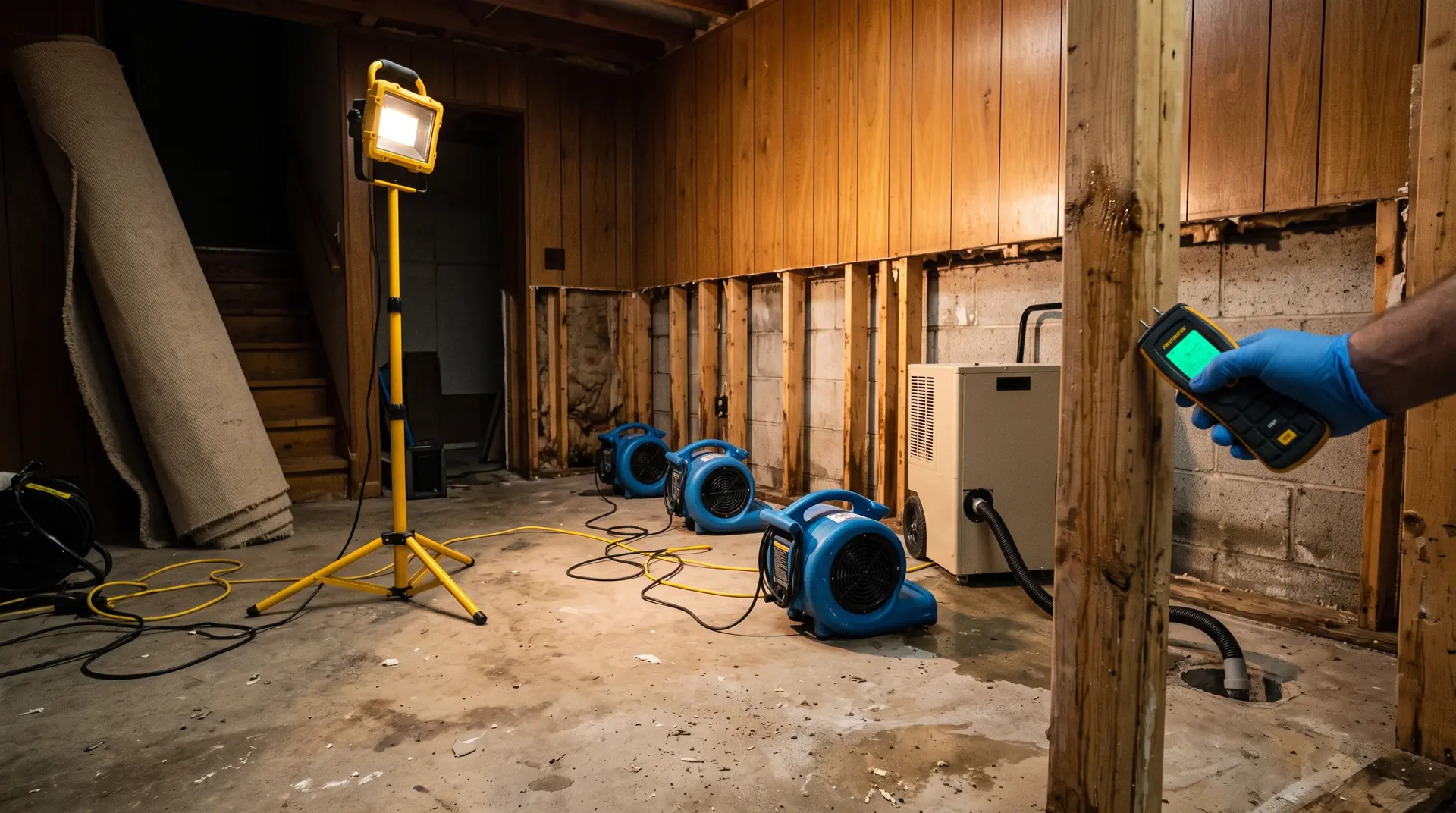
Air movers and a dehumidifier drying a basement wall cut open at the bottom
Calls answered 24/7

Water Mitigation in Hackensack NJ

Water's off, but the walls are still wet? Mitigation is the part that stops the damage spreading: getting water out, drying what's left and proving it's dry.

Number for Water Damage, Fire, Mold & Sewage

Calls answered 24/7. No obligation to book.

Undercroft Restoration is a free referral service, not a restoration company. Calls are connected to independent local service providers that serve your area, and calls may be recorded. The work is done by those providers, not by this site.

  • One Call Connects You
  • No Obligation to Hire
  • Calls Answered 24/7
  • Stop the Spread
24 to 48 hrsEPA window to dry before mold
DailyIICRC S500 drying readings
~85°FJuly highs: humid air slows drying
~52%Hackensack homes built before 1970
01

Water Remediation in the First 72 Hours, Before a Hackensack Leak Turns Into a Mold Job

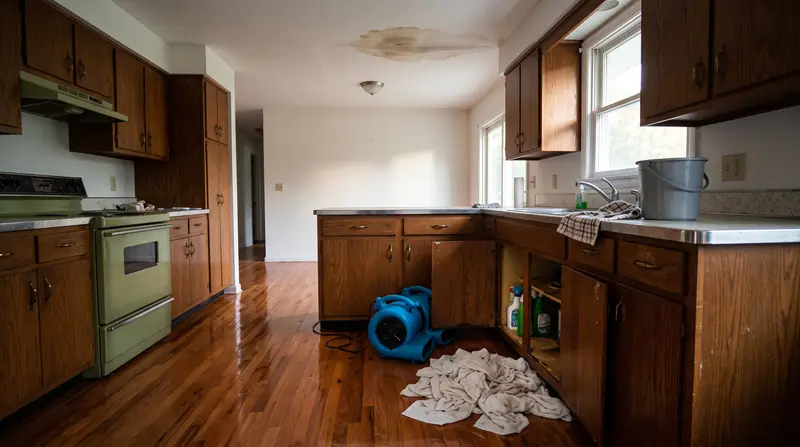
Once the leak is stopped, the clock doesn't stop with it. Water that soaked into drywall, carpet pad, subfloor and framing keeps wicking outward and upward. The air in the room fills with moisture, and everything else in the room starts absorbing it too: the couch, the closet, the drywall that never touched the puddle.

The EPA says wet materials should be dried within 24 to 48 hours to prevent mold growth. That's the window this page is about. Drying fast and drying right is what keeps a leak from turning into a mold remediation job two weeks from now.

Fans from the garage won't get you there. Evaporation only works if something pulls that moisture back out of the air, and only a meter tells you whether the inside of a wall is actually drying or just the surface.

Walls still wet? Call (201) 409-9820. Calls answered 24/7. You're under no obligation to book.

Call (201) 409-9820
02

Water Mitigation vs Restoration vs Remediation: What a New Jersey Adjuster Means by Each

Adjusters, contractors and policy wording use these three words differently, and people search for all of them. Here's the plain version.

01

Mitigation: Stop It Getting Worse

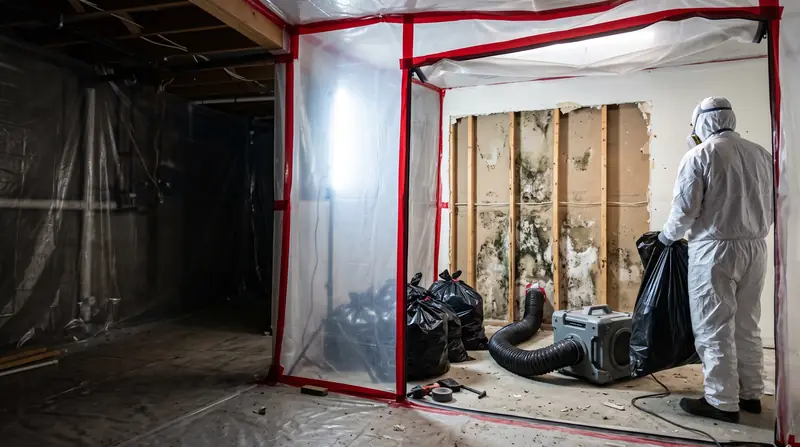
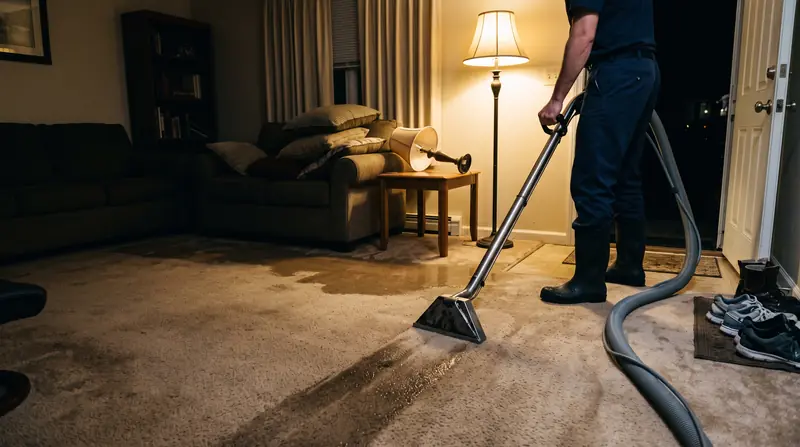
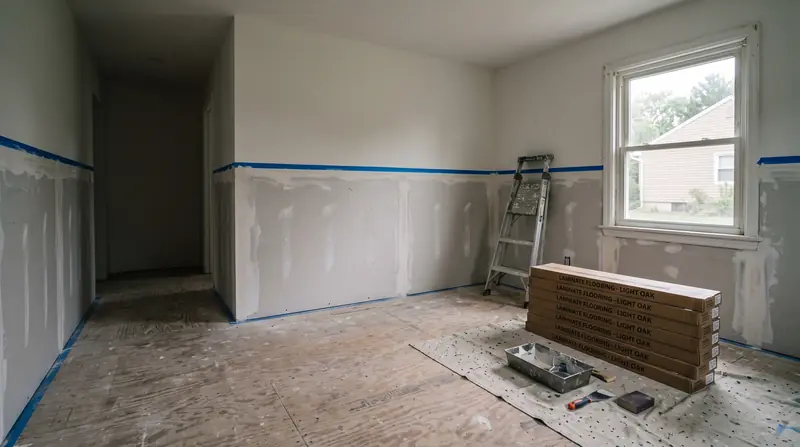
Mitigation is everything that stops the damage from spreading: pulling out standing water, removing materials that can't be saved, setting up dehumidifiers and air movers, and taking readings every day until the structure is dry. It usually starts on day one and ends when the readings say so.
02

Restoration and Repair: Put It Back

Restoration and repair put the room back the way it was: new drywall, paint, flooring, trim. It starts after mitigation is finished. The overview of the whole job lives on the water damage restoration page, and the rebuild itself on water damage repair.

03

Water Remediation Usually Means Contaminated Water or Mold

"Remediation" usually means cleaning up something hazardous: sewage, floodwater or mold. It involves containment, protective gear and disinfection on top of drying. If the water came up a floor drain or from a sewer backup, see sewage cleanup.

03

Why Opening Windows in a Humid Hackensack August Can Slow Drying Down

It feels right to throw the windows open. In a Hackensack summer it often backfires. July highs average around 85°F, the air from July into September is heavy with moisture, and September is the wettest month of the year. Pull that air into a wet basement and you're adding water, not taking it away.

The IICRC S500 drying standard, as C&R Magazine explains it, says drying with outdoor air is only appropriate when the outside air holds less moisture than the air inside. That's a measured decision, not a gut call.

01

Closed Drying: Let the Dehumidifiers Do the Work

Most summer jobs here use closed drying: windows shut, and dehumidifiers pull the water out of the air while fans push dry air across wet surfaces. Good dehumidification services use two main types of machine. Refrigerant units (often labeled LGR, low grain refrigerant) work like a very strong home dehumidifier. Desiccant units use a drying material instead and do better in cool spaces.

02

Winter Heat Helps, Summer Humidity Fights Back

In January, cold outdoor air holds very little moisture and your heating system warms the house, so drying conditions are often good. In August, the same job fights the weather. That's one reason the same size leak can take a day or two longer to dry in summer.

03

Grains Per Pound: the Number Your Crew Should Be Tracking

Relative humidity changes with temperature, so on its own it can mislead. Grains per pound (GPP) measures how much water is actually in the air. A good crew records GPP inside the drying area, in a dry room of the house, and outdoors, and it should drop inside the wet area day by day. Ask to see those numbers.

04

From Moisture Map to Dry Standard: Structural Drying in a Bergen County Home

Here's what a proper drying job looks like. Use it as a checklist for whoever sets up in your home.

01

Step 1: Moisture Mapping With Meters and a Thermal Camera

Moisture mapping water damage means finding every wet spot, not just the obvious one. A thermal camera shows cool, damp areas behind walls and under floors. Pin and pinless moisture meters confirm them. The tech marks the wet boundary and writes down where readings were taken, so the same spots get checked every day.

02

Step 2: Standing Water Comes Out First

Extraction removes far more water, far faster, than any dehumidifier can. Pumps and extractors come before drying equipment. The details are on the emergency water removal page.

03

Step 3: Remove Only What Readings Say Can't Be Saved

Soaked carpet pad, wet insulation and drywall that's swollen or wicked water high usually come out. Hardwood, plaster and framing usually stay and get dried. Ask the tech to show you the reading behind each removal.

04

Step 4: Dehumidifiers and Air Movers Sized to the Room

The number of machines depends on the room size, how wet it is and what's wet. The machines are loud and usually run for days. Expect air movers aimed along the base of walls and under cabinets, and dehumidifiers running constantly.

05

Step 5: Daily Readings of Temperature, Humidity, GPP and Material Moisture

The S500 standard calls for daily documentation of temperature, relative humidity, grains per pound and material moisture content. That log is also what your adjuster will ask for. If nobody's taking readings, nobody knows if it's working.

06

Step 6: Done When It Matches the Dry Standard, Not the Calendar

Water damage drying is finished when wet materials read the same as unaffected materials of the same kind in your home. That's the dry standard. Then the equipment gets picked up, and it should be picked up promptly. One North Jersey homeowner had machines sitting in the house four days after drying was done.

05

The Hard Ones to Dry in Hackensack: Plaster, Block Basement Walls, Hardwood and Stacked Units

Hackensack's housing makes some jobs slower than the textbook. About 15 percent of homes were built before 1939, another 36 percent between 1940 and 1969, and most housing in the city is in large buildings.

01

Plaster and Lath Hold Water Longer Than Drywall

Plaster is dense. It soaks up water slowly and gives it back slowly, so pre-war walls usually take longer to dry than drywall. The upside: plaster usually survives a clean-water leak and can stay if it's dried properly and still solidly attached to the lath.

02

Concrete Block Basement Walls in 1940s to 1960s Homes

Many mid-century homes sit on concrete block foundations, and the hollow cores in block can hold water. Drying the room air doesn't dry the inside of a block quickly. If your block walls get wet every time it rains, though, that's groundwater, not a one-time leak, and drying won't fix it. That's a basement waterproofing question.

03

Drying Under Hardwood Without Pulling the Whole Floor

Water gets under hardwood and into the subfloor. Instead of tearing the floor up, crews can lay drying mats or panels on top of the boards that pull moisture up through them with suction. It takes patience, but it often saves the floor.

04

Apartments on Prospect Avenue: Power, Noise and the Unit Below

In a high-rise on Prospect Avenue, drying equipment competes with your apartment's circuits, so the crew may need to spread machines across outlets or rooms. The unit below often needs drying too, which means coordinating with the super, the building manager or the condo board. Expect noise day and night while the machines run.

06

Your Policy Expects Prompt Mitigation: Water Left Sitting Can Shrink a New Jersey Claim

Most homeowners policies include a duty to take reasonable steps to protect your property from further damage after a loss. If water is left sitting for days and mold follows, an insurer may treat that extra damage differently from the original leak. Check your policy's wording, and see the insurance claims help page for more.

01

Photos and Moisture Logs Adjusters Ask For

New Jersey's Department of Banking and Insurance tells policyholders to photograph damage before throwing anything away. Add the daily moisture log from the drying crew and you've got most of what an adjuster needs.

02

Mitigation Is Often Billed Separately From the Rebuild

On many claims, drying and rebuild are handled as two stages, sometimes by two different companies. Ask your adjuster how your claim will be split so nothing falls through the gap.

07

Fans Left Running and Nobody Checking? What Goes Wrong on Bergen County Drying Jobs

When a drying job goes wrong, it's rarely the machines. It's equipment left running days after the readings are dry, updates that stop once the deposit is paid, and a job that was supposed to take a week stretching into months. Every one of those comes down to nobody being in charge of the job.

01

Questions to Ask Any Water Mitigation Company Setting Up in Your Hackensack Home

  • Who reads the meters, and how often?
  • What's the dry standard you're measuring against?
  • When will the equipment be picked up?
  • Who updates me, and how?

If you can't get a clear answer to all four on the first visit, keep asking until you do.

02

How Undercroft Restoration Calls Work: You're Connected With a Local Drying Crew

Undercroft Restoration is a referral service. When you call (201) 409-9820, you're connected with an independent, third-party company that serves your area. That company sets up the drying and does the work. Undercroft Restoration doesn't do the work, set prices or hold contractor licenses, which is why this page gives you the questions to ask. For how the line works across every service, see the home page.

08

Four Days of Dehumidifiers in a Hackensack Basement Apartment: What the Readings Showed

About this example. Undercroft Restoration connects callers with independent companies and doesn't publish their customers' jobs. This is an illustrative example, not a record of a real job. It's set during a real event: the July 2026 heat waves, when the New Jersey Department of Health urged heat precautions on July 14 as a second heat wave of the month hit the state. The readings show how a typical closed-drying job trends.

A washing machine fill hose splits in a basement apartment in a Hackensack two-family during that mid-July heat. The tenant shuts the valve, but water has spread under the laminate and wicked up the drywall. Their first instinct: open the windows.

The tech shuts them. Outdoors the air holds more moisture than the basement does, so the first job of mitigation: water out, windows closed. The crew extracts, pulls the laminate and the bottom of the drywall, and sets up two dehumidifiers and four air movers.

Day GPP in the drying area Drywall reading vs dry standard
1 High (humid, wet room) Well above
2 Falling steadily Above
3 Close to the dry room Slightly above
4 Matches the dry room At dry standard

On day four every marked spot matches the dry standard, the equipment is picked up that day, and the log goes to the adjuster. The lesson: in a Hackensack summer, keep the windows shut and let the machines work.

09

Before and After Drying: Water Removal, Repair and Mold Help in Bergen County

10

Drying Homes Across Hackensack 07601 and Bergen County, From Route 4 to Route 17

Drying calls come from every part of Hackensack, from the Fairmount section and the Prospect Avenue high-rises to downtown Main Street and the Johnson Avenue area, and from towns off Route 4 and Route 17 across the county. More on water damage in Hackensack.

Towns Around Hackensack: Teaneck, Paramus, River Edge, Maywood, Lodi and Fort Lee

Calls from Teaneck, Paramus, River Edge, Maywood, Lodi and Fort Lee are connected the same way, along with the rest of the Bergen County service area.

11

Walls Still Wet Days Later? Call and Get Connected With a Drying Crew in Bergen County

Need emergency water mitigation or a second opinion on a drying job that's stalled? Call (201) 409-9820. Calls answered 24/7. For drying after water damage in Bergen County: have your town and what happened ready when you call.

Questions

What Bergen County Homeowners Ask About Drying Out After a Leak

Still have a question?

Calls answered 24/7. Pick the number for your problem, then say your town and what happened.

How long does drying usually take?

Three to five days of equipment is common for a clean-water leak. The real answer is: until the readings match the dry standard. Plaster, block walls and humid summer weather can add time.

Can I dry it myself with fans and a shop vac?

For a small spill on a hard floor caught right away, maybe. For anything that soaked into drywall, carpet pad or subfloor, you can't see or measure what's inside the wall without a meter. Surfaces can feel dry while the cavity stays wet.

What comes first, mitigation or remediation?

Mitigation stops the spread and dries the structure. Remediation handles contamination such as sewage or mold. When both are needed, containment and removal of contaminated material usually come first, with drying running alongside.

Why is the crew removing drywall that looks fine?

Because the meter says it's wet behind the surface. Drywall can wick water well above the visible line, and insulation behind it may be soaked. Ask to see the readings for each section that comes out.

How loud is the equipment, and can I sleep at home?

It's loud, like several box fans and a window air conditioner running at once, day and night. Most people stay home for clean-water jobs. With Category 3 water such as sewage, keep kids, older relatives and pets out of the affected area.

Will the dehumidifiers raise my electric bill?

Yes, somewhat. Several machines running around the clock use real power. Some policies reimburse the extra electricity; ask your adjuster and keep your bills from before and after.

What affects water remediation cost in Bergen County?

The category of water (clean, gray or black), how many square feet are wet, what materials have to come out, how many days of equipment it takes, and whether containment is needed. Call (201) 409-9820 and ask for a written scope before any work starts.

Does insurance pay for mitigation?

Usually, when the loss itself is covered, such as a sudden burst pipe. Drying after a gradual leak or flood may not be covered under a standard homeowners policy. Check your wording and see the insurance claims help page.

My basement walls get damp every time it rains. Is that a drying job?

No. Walls that get wet with every storm are taking on groundwater. Drying treats the symptom; it'll come back. That's a job for basement waterproofing.

Do you dry out condos and apartments too?

Yes. Calls from condos and apartments are connected the same way. Drying a unit often means drying the one below as well, and coordinating with the super or condo board about access and power.

Call (201) 409-9820Water, Fire, Mold & Sewage