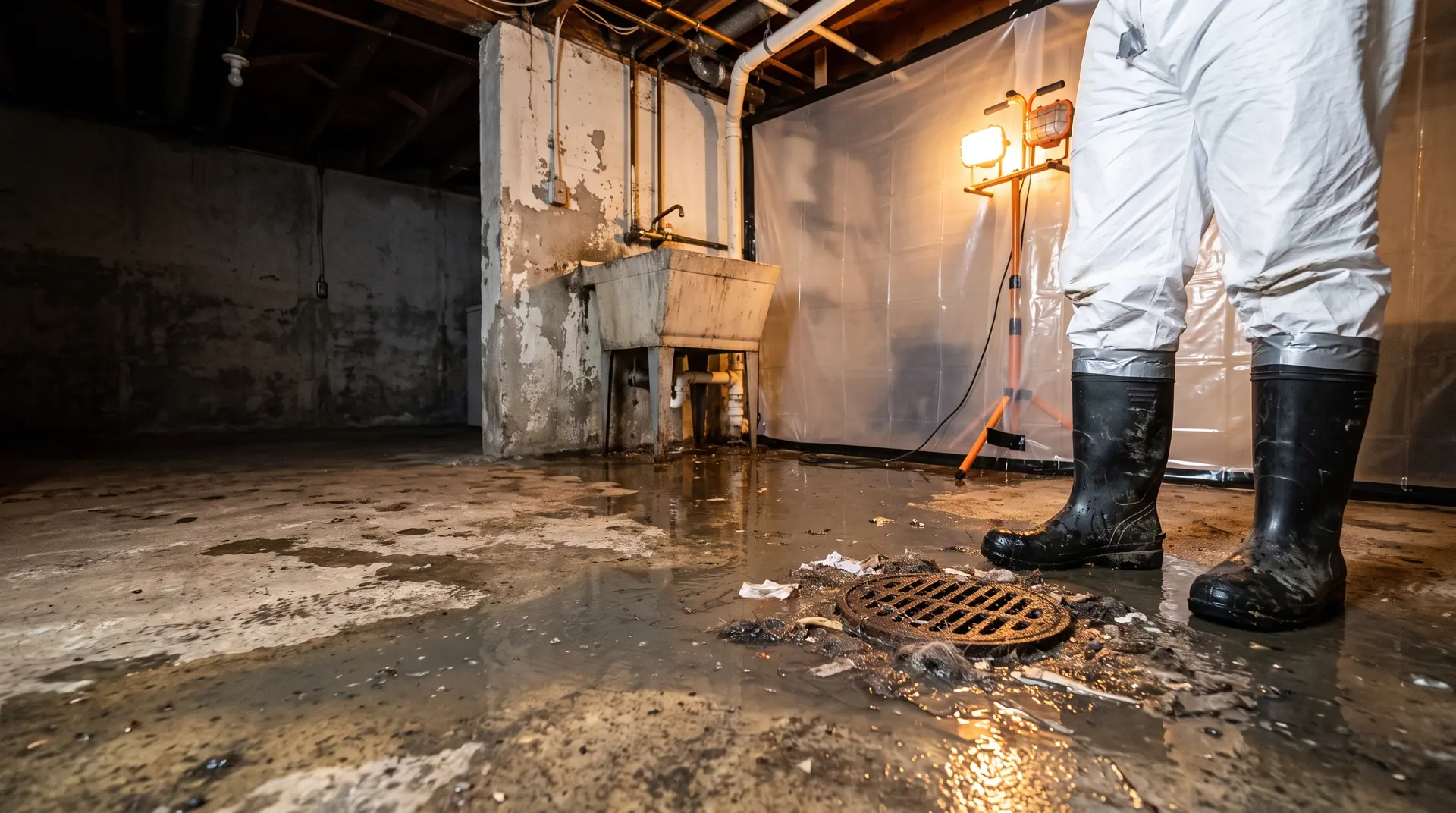
Dark water backing up from a basement floor drain inside plastic containment
Calls answered 24/7

Sewer Backup Cleanup in Hackensack NJ

Dark water coming up the floor drain, or the toilet overflowing by itself? A sewage backup is a health hazard first and a cleanup job second.

Number for Water Damage, Fire, Mold & Sewage

Calls answered 24/7. No obligation to book.

Undercroft Restoration is a free referral service, not a restoration company. Calls are connected to independent local service providers that serve your area, and calls may be recorded. The work is done by those providers, not by this site.

  • One Call Connects You
  • No Obligation to Hire
  • Calls Answered 24/7
  • Safe Category 3 Cleanup
Category 3Sewage: the most contaminated water
7,000 ftNew wastewater pipe, Hackensack 2026 project
Heavy rainCan push combined sewers into basements
EndorsementUsually needed for backup coverage
01

Sewage Cleanup Is a Category 3 Job: Why Hackensack Homes Shouldn't Tackle It With a Mop

Sewage carries bacteria, viruses and parasites that can make people sick. The IICRC's water damage standard classes it as Category 3, the most contaminated kind of water, and that's how a proper crew handles it: protective suits, gloves, boots and respirators, and nothing porous left behind.

A mop and a bucket of bleach spread it around. A shop vac blows contaminated mist out the exhaust. And anything soft the sewage soaked, like carpet, pad, drywall, insulation or a couch, can't be cleaned well enough to keep.

Keep the most vulnerable people away from the area. In Hackensack, about 18 percent of residents are 65 or older and about 15 percent are under 18. Older relatives, young kids, anyone pregnant or with a weakened immune system, and pets should stay out until the area is cleaned and disinfected. For health questions, the CDC's floodwater safety guidelines, which cover sewage-contaminated water, are a good place to start, and call a doctor if anyone feels sick.

Sewage in the house right now? Call (201) 409-9820. Calls answered 24/7. You're under no obligation to book.

Call (201) 409-9820
02

Why Sewer Backup Hits Basements West of the Railroad in Hackensack

This part of the story is local, and nobody else explains it.

01

Combined Sewers: Rain and Wastewater Share the Same Pipe

Parts of Hackensack have combined sewers: one set of pipes carries both rainwater from the streets and wastewater from homes. On a dry day there's plenty of room. In a heavy rain, the pipes fill with storm water, and the wastewater has nowhere to go but back up the house connections. The city's own announcement in May 2026 says it plainly: "during heavy rains, this can cause backups into basements." The city runs a combined sewer overflow program and works with the Bergen County Utilities Authority on the county's long-term plan.
02

Clay Street, Railroad Avenue, Berdan Place and the Anderson Street Drainage Area

That May 2026 announcement names the Anderson Street drainage area, west of the railroad, including Clay Street, Railroad Avenue, Berdan Place, James Street, Berry Street and Stanley Place. The city closed financing for work that adds about 7,000 feet of new wastewater pipe and more than 4,000 feet of new drainage culverts. That's good news for those blocks over time. Until the work reaches your street, and even after, a backwater valve on your own line is the best protection.

03

Roots, Grease and Cracked Laterals in Older Homes

Not every backup comes from the street. About half of Hackensack's homes were built before 1970, and many still have clay or cast iron lateral pipes running from the house to the main. Tree roots find the joints in clay pipe. Cast iron corrodes and scales inside. Grease poured down the kitchen sink hardens in both. When the lateral narrows, sewage backs up into the lowest drain in the house, usually the basement floor drain.

03

Whose Pipe Is It? The Main, Your Lateral and Who Pays in a Bergen County Backup

People search this more than almost anything else about sewers. Here's the general picture.

01

The Town's Main vs Your Lateral

The main runs under the street and belongs to the town or the sewer authority. Your lateral is the pipe from your house to that main. In New Jersey, homeowners usually maintain their own lateral. In Hackensack, plan on the lateral being your responsibility. The city code (§141-12) requires a city permit for private sewer work in a street, so if the break is under the street or you need to dig there, call the city at (201) 646-3980 before anyone starts.

02

When the Backup Comes From the Main After a Storm

Sometimes the problem is the main itself: a blockage, or a combined sewer overloaded by rain. A backup from the town's main can reach a finished basement just as easily as a clog in your own line. If neighbors have the same problem at the same time, that points to the main. Report it to the city right away, and photograph everything.

03

Call a Plumber for the Blockage, a Cleanup Crew for the Mess

Two different jobs. A licensed plumber clears the blockage, runs a camera through the line and repairs the pipe. A restoration crew removes the sewage, tears out what it touched, disinfects and dries. This number connects you with cleanup crews. If the drain is clogged but nothing has come up, call a plumber.

04

Sewage on the Floor: What to Do, and What Not to Touch, Until Help Arrives

  • Stop using water. No flushing, showers, laundry or dishwasher. Every gallon you send down comes back up.
  • Keep everyone out, especially kids, older relatives and pets.
  • Don't run the heat or air conditioning if the system pulls air from the basement; it spreads the smell and contamination.
  • Stay away from the panel and outlets if the water is near them. Utility safety details are on the emergency water removal page.
  • Take photos of the water, the drain it came from and everything it touched, from the stairs if you can.
  • Wash thoroughly with soap and clean water if you touched it.
05

Sewage Backup Cleanup Step by Step, From Containment to a Fresh Smelling Basement

Here's what proper Category 3 work looks like, in plain words.

01

Step 1: Contain the Area and Suit Up

The crew seals off the affected area with plastic sheeting (a "plastic wall") so contamination doesn't travel through the house. Everyone working inside wears protective suits, gloves, boots and respirators.

02

Step 2: Pump Out Liquid and Remove Solids

Standing sewage is pumped out, and solids are shoveled and bagged for disposal. This is the least pleasant part of raw sewage work, and the most important to do right.

03

Step 3: Porous Materials That Sewage Touched Come Out

Carpet, pad, drywall up above the wet line, insulation, particleboard, upholstered furniture, cardboard boxes and anything soft goes. There's no safe way to clean sewage out of them.

04

Step 4: Clean, Disinfect and Treat Every Hard Surface

Concrete, studs, tile, metal and plastic are scrubbed, then treated with a disinfectant made for Category 3 contamination. Black water cleanup isn't finished until every hard surface the water touched has been cleaned twice over: once to remove soil, once to disinfect.

05

Step 5: Dry It and Clear the Odor

Dehumidifiers and air movers dry the space, with daily readings, as described on the water mitigation page. Air scrubbers and odor treatment handle what's left in the air. The job isn't done until the smell is gone, too.

06

Stop It Happening Again: Backwater Valves, Cleanouts and Lateral Camera Checks

"Why does my sewer keep backing up?" is one of the most common questions people search. The fixes are plumbing work, done by a licensed plumber:

  • Backwater valve: a one-way valve on your line that closes when sewage tries to flow back into the house. In combined-sewer areas it's the single most useful upgrade.
  • Accessible cleanout: an opening on the line so a plumber can clear it without pulling a toilet.
  • Camera inspection of the lateral: shows roots, cracks and sags so you fix the right spot.
  • Kitchen habits: grease in the trash, not the sink.

Undercroft Restoration doesn't install any of these. Ask a plumber, and in Hackensack, ask the city about permits for any work in the street.

07

Sewage Clean Up and Insurance: Why New Jersey Policies Need a Backup Endorsement

Standard homeowners policies usually don't cover sewage or water that backs up through drains. As The Hanover explains, water backup is optional coverage that has to be added on. With the endorsement, there's usually a separate, often small, limit. Without it, the whole job may be yours.

Check your declarations page for "water backup" or "sewer and drain backup" coverage, and add it before you need it, especially west of the railroad in Hackensack. The insurance claims help page covers documentation and working with your adjuster.

08

Drain Companies Clear the Pipe, Not the Basement: Who to Call for Bergen Sewage Cleanup

For a sewage backup in Bergen County, a drain or plumbing company, or the county utility authority, is the right call for the clog. They're not usually the ones who tear out and disinfect a finished basement. And a franchise office's service area may not include every town it advertises in, so ask whether it covers yours.

01

Questions to Ask a Crew Before Sewage Work Starts

  • Do you follow Category 3 procedures: containment, protective gear, disinfection?
  • What exactly will you remove, and why?
  • What disinfectant do you use, and on what surfaces?
  • Will I get a written scope before work starts?
02

How Undercroft Restoration Calls Work: You're Connected With a Local Cleanup Crew

Undercroft Restoration is a referral service. When you call (201) 409-9820, you're connected with an independent, third-party restoration company that serves your area. That company does the containment, removal, disinfection and drying. Undercroft Restoration doesn't do the work, set prices or promise arrival times. For how the line works across every service, see the home page.

09

The Town Main Backed Up Into a Finished Basement: One Bergen County Sewage Job

About this example. Undercroft Restoration connects callers with independent companies and doesn't publish their customers' jobs. This is an illustrative example, not a record of a real job. It's built on the City of Hackensack's May 2026 notice that combined sewers can back up into basements in heavy rain.

A two-family house west of the railroad in Hackensack. Heavy rain all afternoon. Around 6 p.m. the owner goes down to the finished basement and finds dark water spreading from the floor drain across the carpet toward the couch and the kids' toys. The neighbor next door has the same thing.

She stops everyone upstairs from using water, keeps the kids upstairs, takes photos from the stairs, and calls the city to report it. Then she calls for cleanup.

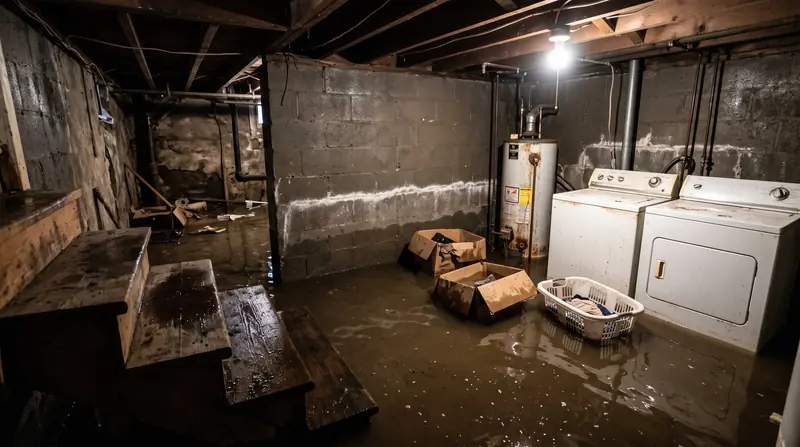
The crew seals the basement with plastic and suits up. About an inch of sewage is pumped out. Carpet, pad, the couch, the toys in cardboard bins, and the bottom two feet of drywall and insulation all come out. Studs and concrete are scrubbed and disinfected, then dried for four days with daily readings and an air scrubber running.

Her policy has a water backup endorsement, so part of the cleanup is covered up to its limit. A plumber installs a backwater valve before the rebuild.

The lesson: in a combined-sewer neighborhood, a backwater valve and a backup endorsement are worth more than anything you'll put in the basement.

10

Before and After a Backup: Basement, Mold and Water Help Across Bergen County

11

Sewage Calls From Hackensack 07601 and Across Bergen County

Calls come from the Anderson Street drainage area west of the railroad, the Fairmount section, downtown and the Prospect Avenue high-rises, and from towns across the county. Calls from Teaneck, Paramus and Fort Lee are connected the same way. More on water damage in Hackensack and the full Bergen County service area.

Call any time

Sewage Coming Up Right Now? Call for Sewage Cleanup and Get Connected in Bergen County

Calls answered 24/7. For sewage in Bergen County homes. For a clogged drain with no mess, call a plumber.

Undercroft Restoration is a free referral service, not a restoration company. Calls are connected to independent local service providers that serve your area, and calls may be recorded. The work is done by those providers, not by this site.

Questions

What Bergen County Homeowners Ask About Sewage in the House

Still have a question?

Calls answered 24/7. Pick the number for your problem, then say your town and what happened.

Is a sewage backup an emergency?

Yes. It's a health hazard, it spreads into walls and floors the longer it sits, and it keeps coming back up every time anyone uses water. Stop using water, keep people out, and call.

What should I do if I touched raw sewage?

Wash the skin thoroughly with soap and clean water, and wash the clothes separately in hot water. Don't touch your face or eat until you've washed. If you get sick or have an open cut that was exposed, call a doctor. The CDC has more guidance.

Who is responsible for the sewer line?

Usually, the town or sewer authority maintains the main under the street, and the homeowner maintains the lateral from the house to the main. In Hackensack, work in the street needs a city permit, so call the city at (201) 646-3980 before digging there.

Can I stay in the house during the cleanup?

Usually, if you stay away from the contained area and the rest of the house is unaffected. Older relatives, young kids, anyone pregnant or immunocompromised, and pets are better off elsewhere until disinfection is done.

Can sewage-soaked carpet or drywall be cleaned and kept?

No. Porous materials that sewage soaked can't be cleaned safely and are removed. Hard surfaces like concrete, tile and studs can be cleaned and disinfected.

Does homeowners insurance cover a sewer backup?

Usually only if you added a water backup or sewer and drain backup endorsement, and then up to that endorsement's limit. Check your declarations page.

What affects the cost of cleaning up sewage?

How large an area is affected, how deep the sewage got, whether the basement is finished, what has to be removed, and how many days of drying it takes. Call (201) 409-9820 and ask for a written scope before any work starts.

Why does my sewer keep backing up?

Usually roots, grease or a cracked lateral, or, in combined-sewer areas, the main filling up during heavy rain. A plumber's camera inspection finds the cause. A backwater valve stops sewage from the main coming back into the house.

My basement flooded with rainwater, not sewage. Is this the right page?

Rainwater and groundwater are handled differently. See flooded basement cleanup. If you're not sure what it is, treat it as sewage until someone checks.

How long before the basement smells normal again?

Once everything contaminated is removed, the surfaces are disinfected and the space is dry, the smell usually clears within days. Air scrubbers speed that up. If it lingers, something was missed.

Call (201) 409-9820Water, Fire, Mold & Sewage